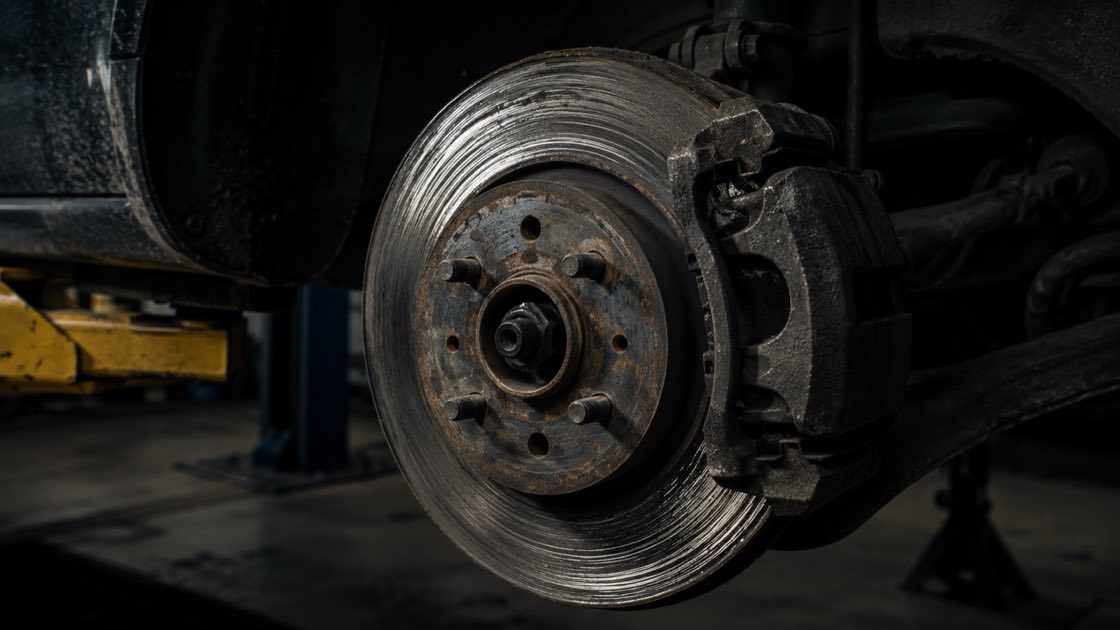
How Dad would explain it
If your brakes are squealing, you’ve usually got a week or two to get them looked at, so don’t panic. That squeal is just the little wear indicator telling you the pads are getting thin. But if you hear grinding, that’s metal on metal and the pads are gone, so stop driving on it and come in now. The squeal is a heads-up. The grind is the bill getting bigger.
A lot of folks hear a little squeak and ask the same thing: “Can I keep driving it a while longer?” Fair question. Nobody wants a surprise repair when the car still stops fine most of the time.
Short answer: a squeal usually buys you a week or two to come in. Grinding means stop now. Below I’ll walk you through how to tell the difference, what the numbers actually are, and what it costs if you wait. No scare tactics, just how I’d explain it to a neighbor in the bay.
Why Brake Pads Wear Down (and Why It Sneaks Up on You)
Brake pads are the part that squeezes against the rotor to slow you down. Every time you hit the brakes, a little bit of pad material wears away. Think of them like tire tread. They get thinner over time until there’s not enough material left to do the job safely.
The tricky part is brakes rarely go from “perfectly fine” to “failed” overnight. They fade gradually, so it’s easy to talk yourself into thinking it’s not urgent yet. Around here on Cascade Road, the stop-and-go through West End and the hills over toward Greenbriar work brakes harder than a steady highway commute. Southwest Atlanta driving tends to chew through pads a little faster than people expect.
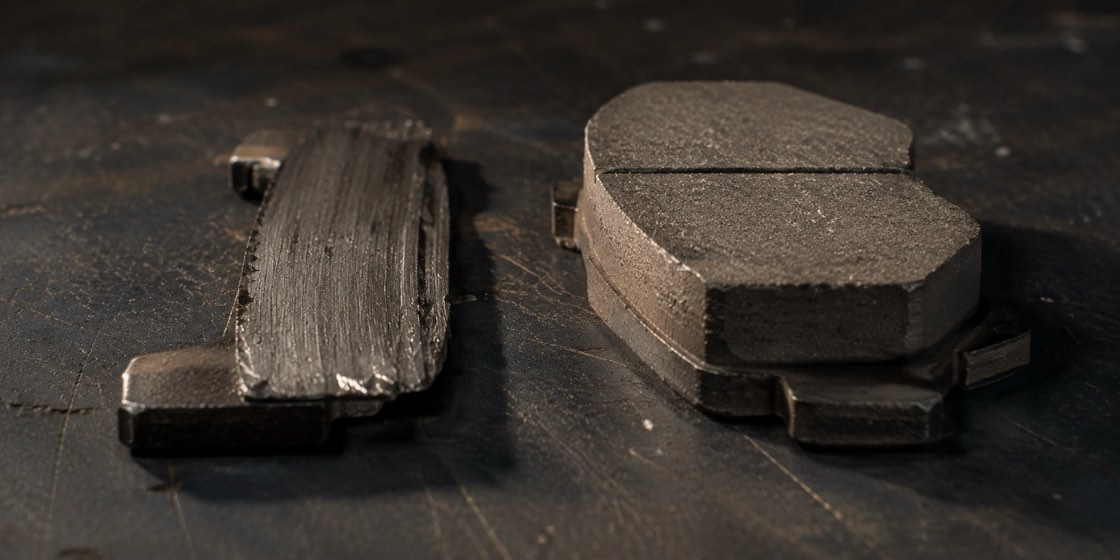
The Actual Numbers: How Thin Is Too Thin?
This is where having a real measurement helps, instead of guessing.
- A brand-new brake pad is about 10–12mm of material.
- Around 3–4mm, it’s time to plan a replacement. You’re not in danger yet, but the clock’s ticking.
- Under about 2mm, it’s dangerous. You’re getting close to metal-on-metal, and that’s when rotors start taking damage.
If you want to go deeper on the measurement side, we wrote a whole piece on what counts as good brake pad thickness. And if you’re trying to picture what a worn pad actually looks like, here’s what a worn brake pad looks like.
Squeal vs. Grind: How to Read the Noise
Your car usually warns you before things get dangerous. The trick is knowing which sound means what.
Squealing or squeaking is almost always the wear indicator. That’s a little metal tab built into the pad that’s designed to make noise once the pad gets thin. It’s annoying on purpose. If you hear it, the pads are low but you’ve still got a little time, usually a week or two, to get in for a look.
Grinding is a different story. That rough, metal-scraping sound means the pad material is gone and the metal backing plate is rubbing the rotor directly. At that point you’re not buying time anymore. Come in now, before the rotor gets chewed up.
A few other things worth noticing:
- Longer stopping distances
- Vibration through the pedal when you brake
- A soft or spongy pedal
- The brake warning light
- The car pulling to one side when you stop
If a couple of those show up together, get it checked. If it were my car, I wouldn’t sit on it.
What It Costs If You Wait
Here’s the honest money part, because that’s usually what people are really asking.
Catch it early and a brake pad job starts around $180 per axle. That’s the affordable end, and it’s where most folks land if they come in when the squeal starts.
Wait until it’s grinding and you’ve usually wrecked the rotors too. Now you’re looking at pads plus rotors, which runs more like $350 or $400 and up. Same problem, just caught too late. The pads were never the expensive part. The rotors are.
You can see straightforward numbers on our pricing page so there are no surprises. And if you’d rather just have us look first, the inspection is free.
So How Long Can You Actually Keep Driving?
It depends on how worn the pads already are, which is the honest answer.
- Just starting to squeal? You’ve likely got a week or two of normal driving. Get it on the calendar.
- Grinding, heavy vibration, or struggling to stop? That’s now. Don’t push it.
Driving habits, traffic, vehicle size, and the hills around Southwest Atlanta all change how fast thin pads go bad. The thing to remember is that once the material gets thin, wear speeds up. So “a few more months” can turn into a few more weeks pretty quick. I’d tell my own family the same thing.
What We Check During a Brake Inspection
A brake inspection isn’t just somebody glancing at the wheels. Here’s what we actually look at when your car comes in:
- Pad thickness: measured, not eyeballed, so you get a real number.
- Rotor condition: grooves, heat spots, uneven wear.
- Calipers: a sticking caliper wears one pad down faster than the rest.
- Brake fluid: low or dirty fluid affects how the car stops.
- Pedal feel: soft or spongy can point to something beyond the pads.
We’re not trying to turn every inspection into a big bill. Plenty of times the pads still have life left, and we’ll tell you that. If something’s genuinely unsafe, we’ll tell you that straight too. That’s the deal. You can read more about how we handle brake repair if you want the full picture.
Every brake job we do is backed by our 10-month/10,000-mile warranty, so once it’s fixed, it stays fixed.
Frequently Asked Questions
How do I know if my brake pads are dangerously low?
Grinding noise, much longer stopping distances, strong vibration, or pad material under about 2mm. Any of those means it's no longer a "wait and see" situation. The free inspection will tell you the exact thickness.
Can I still drive with squeaky brakes?
Usually, yes, for a short stretch. A squeal is typically the wear indicator doing its job, which means the pads are low but not gone. Get in within a week or two before it turns into grinding.
What happens if brake pads wear down completely?
The metal backing plate grinds straight against the rotor. That damages the rotor and cuts your stopping power, and it turns a roughly $180-per-axle pad job into a $350-plus pad-and-rotor job.
How often should brake pads be replaced?
Most pads last somewhere between 30,000 and 70,000 miles depending on how and where you drive. Stop-and-go Southwest Atlanta driving tends to land on the shorter end.
How long does a brake pad replacement take?
Most standard pad jobs are done in a couple of hours, depending on what shape the rotors and calipers are in.
Is the brake inspection really free?
Yes. We'll measure the pads, check the rotors, calipers, and fluid, and tell you exactly where things stand before you spend a dime.
Come Get It Looked At
If your brakes are squealing, vibrating, or just not feeling right, bring it by Dad’s Auto Repair Shop on Cascade Road and we’ll take a look. The inspection’s free, the pricing’s honest, and the work is backed by our 10-month/10,000-mile warranty.
Book your appointment or just reach out and we’ll help you figure out the safest next step for your car.