Services / Brake Repair in Atlanta.

Brake Repair in Atlanta.

We'll show you exactly what's worn — no guessing, no scare tactics. Free inspection on every visit. Pads start at $180 per axle. Pads + rotors $350 front / $400 rear. Parts warrantied 10,000 miles or 10 months.

4.9 / 5 · 5,000+ cars serviced
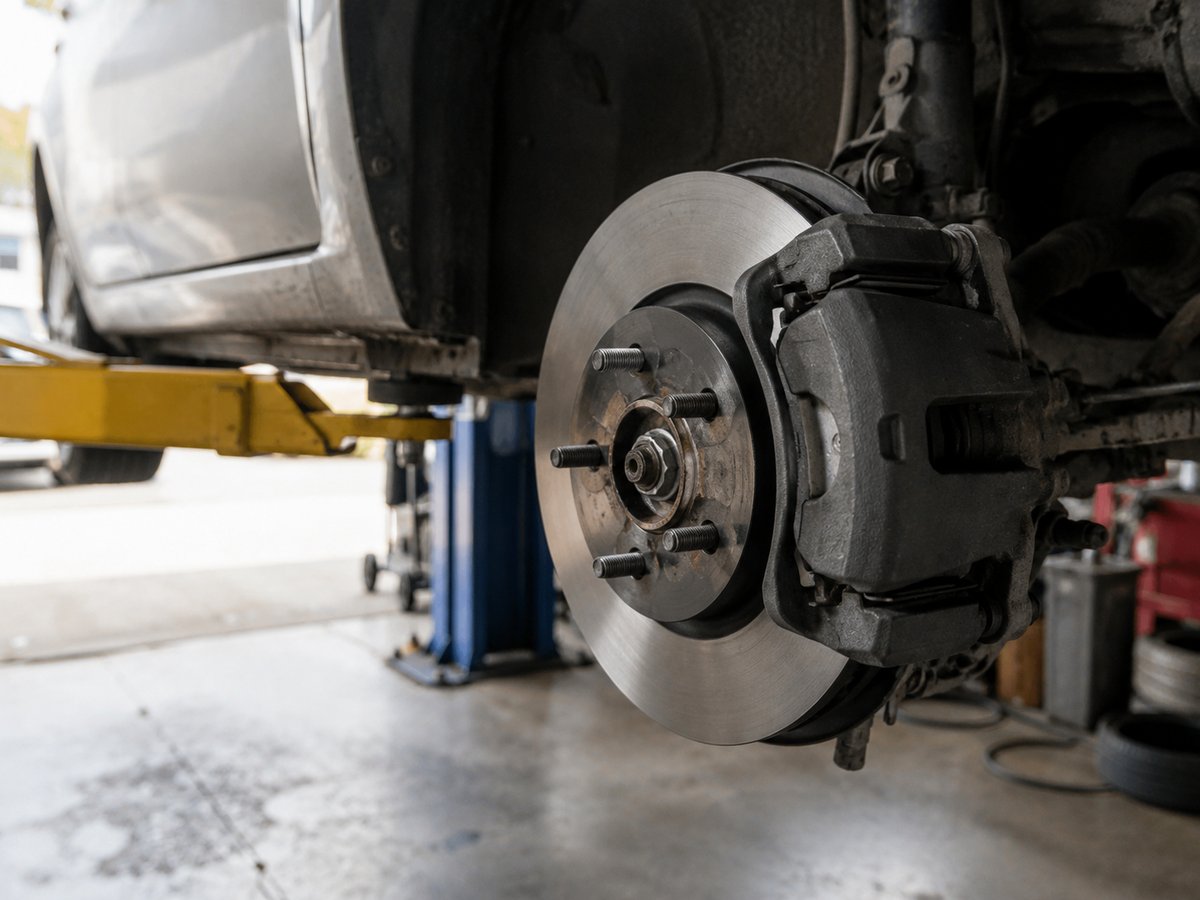
A car on the lift with the wheel removed, showing the brake rotor and caliper at Dad's Auto Repair Shop
When to come in

Brake symptoms, decoded.

Brakes don't just go bad overnight — they tell you they're getting worn out, if you know what to listen for. Atlanta drivers wear brakes faster than most, especially with the I-285 stop-and-go and the hilly stretches around Cascade and Buckhead. If your car is doing any of these things, come in soon. Most brake symptoms are inexpensive to fix when caught early, and expensive when ignored.

Squealing or screeching when you brake

Usually the pad wear indicator — a small metal tab designed to make noise when pads get thin. You have some time, but plan a visit. Typical fix: pad replacement, $180+ per axle.

Squealing only on the first brake of the morning

Often nothing — moisture or dust on the rotors burns off after the first few stops. If it persists past a couple stops, it's probably the wear indicator. We'll check at no charge.

Grinding or metallic scraping

Bad sign. Pads are gone and you're grinding metal-on-metal. Stop driving and get towed in. Now you likely need pads + rotors — $350 front, $400 rear.

Vibration or pulsing in the steering wheel

Front rotor warpage. Usually from heat — hard braking down a hill, or sitting at a long stoplight after a hard stop. Rotors can sometimes be resurfaced; usually they need replacement.

Vibration or pulsing in the seat or pedal

Rear rotor warpage. Same cause as front warpage but felt differently because of where the rear axle sits. Treated the same way — measure first, replace if needed.

Brake pedal feels soft or spongy

Usually a brake fluid issue — air in the lines, contaminated fluid, or in worse cases a leak. Soft brakes are a safety issue; we should look at it before your next drive.

Car pulls to one side when braking

Usually a stuck caliper on the opposite side. The good caliper is doing all the work while the stuck one isn't engaging. Often fixable with a caliper service rather than a full replacement.

Brake warning light on the dash

Either low fluid or a sensor reading low pad thickness. Either way: come see us. Driving with the brake light on is risky and the cause is usually inexpensive to diagnose.

How it works

Brake work, with the receipts.

When you bring your car in for brakes, we start with a free inspection. We pull the wheels off, measure pad thickness with a gauge, measure rotor thickness with a micrometer (not by eye), check brake fluid level and quality, and visually inspect the calipers and brake lines. Then we show you what we found — usually with the worn parts right in front of you so you can see for yourself.

Most of the time, brake jobs are simpler than people fear. New pads, sometimes new rotors. Sometimes we'll catch something more serious — a stuck caliper, a torn brake hose — and we'll explain it, quote it, and give you the option to proceed or come back another day.

We'll never recommend rotors when pads alone will do. A lot of brake jobs come to us as second opinions — folks who've been quoted "you need everything" elsewhere and want to make sure that's real. We tell you what your car actually needs, you decide. Every brake job is backed by a 10-month / 10,000-mile parts and labor warranty.
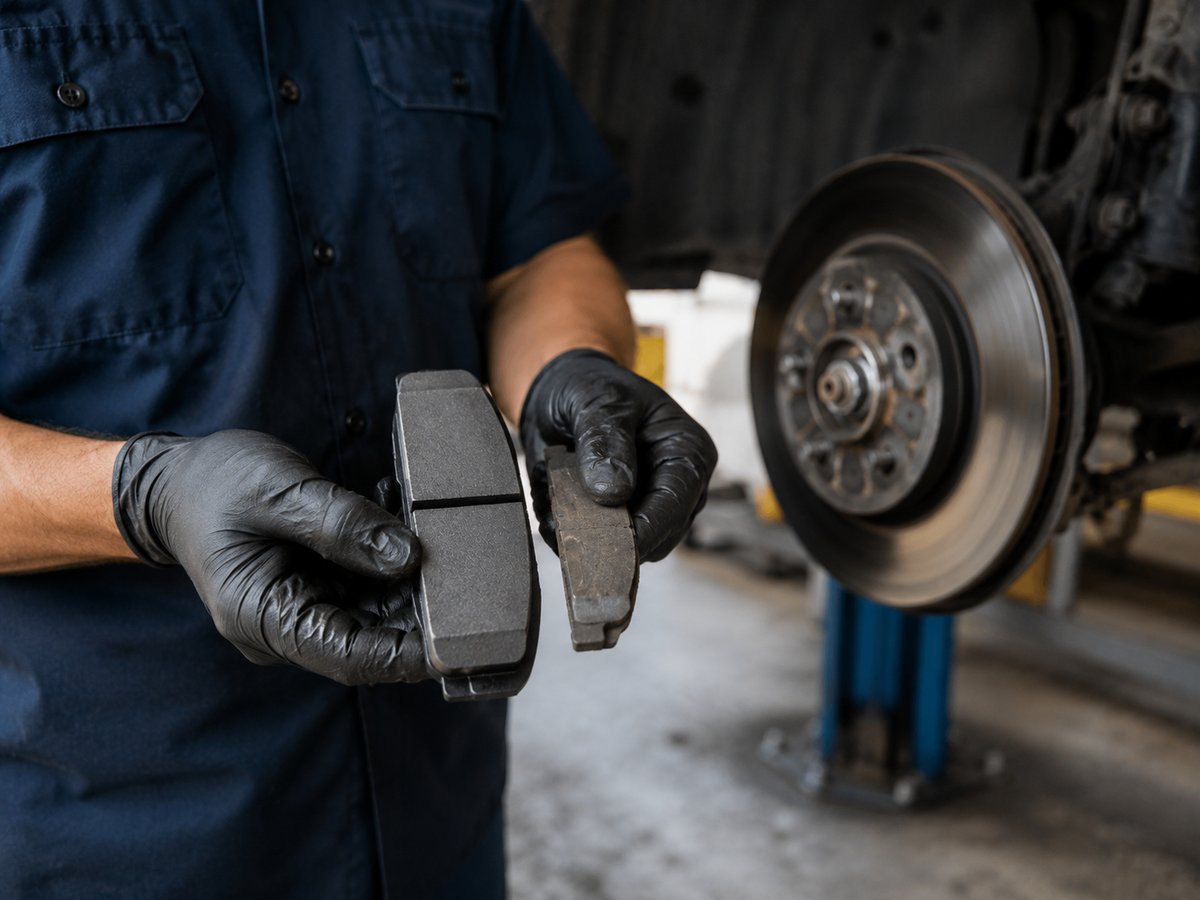
A Dad's Auto Repair mechanic holding a new brake pad next to a worn one, brake rotor behind
The decision

Pads only, or pads + rotors? How to tell.

This is the question that determines whether your brake job is $180 or $350+. Some shops make the decision for you. We make it with you, with the parts in front of you on the bench. Here's how to know what your car actually needs.

Pads alone is enough when...
  • Rotor thickness is above the minimum spec stamped on the rotor itself — usually 1–2mm above min.
  • Rotor surface is smooth — minor scoring is normal, deep grooves you can catch a fingernail in are not.
  • No warpage symptoms — no vibration through the steering wheel or pedal when braking.
  • The pads themselves were caught early — squealing or wear-indicator stage, not yet grinding.
Rotors are necessary when...
  • Rotor thickness is at or below minimum spec — non-negotiable, this is a safety threshold.
  • Deep scoring or pitting from worn pads riding metal-on-metal.
  • Visible warpage — usually felt as vibration when braking from highway speeds.
  • Rust pitting — common on cars that sit unused for long stretches.
  • Heat damage — bluish discoloration from extreme heat events.

The honest test: if your shop says you need rotors, ask them whether they measured with a micrometer. The minimum thickness is stamped right on the rotor — there's a real number, not an opinion. Any shop that won't show you the measurement is asking you to take their word for it.

What you're paying for

What's actually in a brake job.

When you see "$180 brake pads" you might wonder what that actually covers. Here's the full picture — every brake job at Dad's includes all of this. No "shop supplies fee" added at the counter. No upsell on items that should already be included.

01

The free inspection

Wheels off, pads measured, rotors measured with a micrometer, fluid checked, calipers and lines inspected, written report. No charge whether you proceed with work or not.

02

Quality aftermarket pads

We install OEF3 pads and rotors — premium aftermarket parts engineered to match original-equipment fit and performance, at a fraction of the dealer cost. The same parts we'd put on our own cars.

03

Hardware refresh

New shims, anti-rattle clips, and slide pin grease where needed. Most cheap brake jobs reuse old hardware. Reusing rusted clips is how you get squealing brakes a month later.

04

Caliper service

We clean the slide pins, check for sticking, and re-grease. Stuck calipers are the #1 cause of premature pad wear and one-sided brake pull. Five extra minutes that saves a lot later.

05

Brake fluid check

Quality test for moisture content. We don't do flushes here, but we'll tell you straight if yours needs one and where to get it done.

06

Test drive & bedding

New pads need to "bed in" properly — a controlled series of stops that transfer pad material to the rotor surface evenly. Skipping this is how you get noisy or pulsing brakes from day one.

07

10-month / 10,000-mile warranty

Parts and labor. If something we worked on isn't right, bring it back, no charge. Whichever comes first.

08

Tax & shop fees

Already included in the price. The number you see is the number you pay.

Brake service options

Posted prices. Free inspection on every visit.

Every job includes.

  • Free brake inspection (wheels off)
  • Pad thickness measurement
  • Rotor thickness measurement (micrometer)
  • Brake fluid level & quality check
  • Caliper & brake line visual inspection
  • Hardware refresh (clips, shims, grease)
  • Caliper slide pin service
  • Test drive & pad bedding procedure
  • Honest written quote before any work
  • 10-month / 10,000-mile parts & labor warranty
Pads start at
$180
per axle
Book inspection →

Free inspection. Quote before any work begins.

Brake Pads (per axle) Most common service. New pads, hardware refresh, rotor inspection. Front or rear. $180starting at
Front Pads + Rotors When front rotors are below spec or warped. Includes new pads. $350starting at
Rear Pads + Rotors Includes new pads and rotors for the rear axle. Slightly more than the front due to caliper design on most modern cars. $400starting at
Full Brake Service (front + rear) Complete pad & rotor replacement on all four wheels. $750starting at
Electronic Parking Brake (add-on) Many newer vehicles have electronic parking brakes integrated into the rear caliper, requiring extra steps. +$50when applicable
Luxury & European Vehicles BMW, Mercedes, Audi, Porsche, Land Rover, etc. Pricing varies by spec. Quotecall us
Why prices differ

Why brake jobs cost what they cost.

If you've called around for brake quotes, you've probably gotten three very different numbers from three places. That's real, and there are real reasons for it. Here's what tends to drive the difference, so you can read your quotes with clearer eyes.

At a dealer

OEM-only parts, often 2x the cost of equivalent aftermarket. Higher hourly labor rates ($150+/hour is common). Sometimes a service writer compensated on revenue rather than diagnostic accuracy. Strong reasons to use the dealer: warranty work, certain ECU-coded brake jobs on newer luxury vehicles, exotic vehicles. Outside those cases, the price reflects overhead, not better work.

At a national chain

Lower advertised entry price, but the all-in number often climbs once you arrive — "shop supplies fees," upsold rotors that may or may not have been measured, separate charges for hardware that should be included. Ask for an itemized quote in writing before any work begins. If they won't give it to you, that's a signal.

At an independent shop like ours

Quality aftermarket parts (same brands the dealer uses, sourced through wholesale channels), $95/hr flat labor, hardware and shop fees baked into posted prices, no commission structure on the team. The written quote you get is the bill you pay. That's the model. It works because we don't need it any other way.

When you're comparing quotes, compare what's included, not just the headline price. A $129 brake job that turns into $329 at the counter isn't cheaper than a $180 job that's $180 out the door.

Brake pad lifespan

How long should brake pads actually last?

There's no universal answer because lifespan depends almost entirely on driving style and the car. Here's the rough range we see on Atlanta cars, in case you're wondering whether you're due. If you're inside these ranges and have no symptoms, you're probably fine. If you're past them, plan a visit. If you're well below the range and already worn out, something's usually wrong (stuck caliper most often) and we'll find it.

Highway commuter
50,000 – 70,000 miles

Long highway stretches, smooth braking, minimal stop-and-go. Pads last longest because braking is gentle and infrequent. If you're commuting from the suburbs into the city via I-75 or I-85, you're probably in this category.

Stop-and-go city driver
30,000 – 45,000 miles

Frequent stops, traffic lights, intown driving. Pads wear faster because you're using them more often. If you're mostly driving Cascade Road, Ponce, or anywhere in town, this is you. Atlanta's traffic patterns put a lot of drivers here.

Aggressive or hilly driver
25,000 – 35,000 miles

Late braking, hill descents, towing, sport driving. Pads wear faster because they're working harder per stop. North Atlanta drivers commuting through the hills around Cascade Heights or Buckhead often fall here.

Hybrid or EV with regen braking
80,000 – 120,000+ miles

Regenerative braking does most of the slowing; the friction brakes only engage at low speeds and emergencies. Pads last dramatically longer. We don't service Teslas or pure EVs, but we do service hybrids — and we see hybrid pads at 100K+ all the time.

The difference

The Dad's way vs. the old way.

Category Dad's way Old way
Pricing Transparent, upfront pricing vs. Mystery prices
Service Fast service & clean space vs. Long waits & loud lobbies
Support Questions welcomed. Explanations offered. vs. Vague answers and blank stares
Attitude We explain everything. Like your dad would. vs. You Googling 'do I need this?'
When we refer out

What we don't do.

A short list of brake work where we're honest enough to say it isn't our specialty. We'd rather send you to someone who'll do it right than half-do the job. We have shops we trust for each of these — call us and we'll point you to one.

Drum brakes

Most modern cars have moved past rear drums, but if your vehicle still has them, we'll refer you to a shop that specializes in drum work. The diagnostic and adjustment process is genuinely different from disc work, and the right specialty shop will do it faster and better than we would.

Standalone brake fluid flushes

We check brake fluid quality during every inspection at no charge. But a full flush is a service we don't offer right now. If your fluid is contaminated or your brakes feel soft, we'll tell you and refer you to a shop that handles flushes.

Tesla and pure-EV brake work

Tesla brake systems use proprietary diagnostic equipment and unique service procedures we don't have in-house. We'll happily service hybrid vehicles, but pure EVs (Tesla, Rivian, Lucid, etc.) need a Tesla-certified shop or specialist. If you have a Tesla, we'll point you in the right direction.

Performance & track brake systems

Big-brake kits from Brembo, Wilwood, AP Racing, and similar — these are aftermarket performance systems requiring specialty knowledge for proper bedding and pad selection. If you've installed an aftermarket performance kit, the shop that installed it is your best bet for service.

Questions welcomed

Common questions about brake service.

If yours isn't here, just call. We're not going to make you fill out a form for a basic question.

Do I really need new rotors, or just pads?

Most of the time, just pads. We only recommend rotors when they're below minimum thickness, severely warped, or so worn they can't be safely resurfaced. If a shop is automatically quoting you "pads and rotors" without measuring first, get a second opinion. The minimum rotor thickness is stamped on the rotor itself — there's a real number to compare against, not an opinion.

Are aftermarket brake pads as good as OEM?

The quality ones are. We install OEF3 pads and rotors — premium aftermarket parts engineered to meet or exceed original-equipment specs (the name stands for Original Equipment Fit, Form and Function), built in quality-certified facilities. Top aftermarket parts are made to the same standards as OEM, often by the very same suppliers, at a fraction of the dealer price. Cheap unbranded pads are a different story — louder, faster-wearing, more abrasive on rotors. There's a real spectrum, and we stay on the right end of it.

Should I replace pads on both axles at the same time?

Only if both are worn. Front and rear pads wear at different rates — fronts typically wear about twice as fast because they handle more of the braking force. We measure both axles during the free inspection and tell you the truth: if rears have plenty of life left, you don't need to replace them yet.

Why is rear brake service more expensive than the front?

On most modern vehicles, the rear calipers integrate the electronic parking brake or use a more complex caliper design, which means more labor time. Front brakes are usually simpler. The price difference reflects the actual time involved — not a markup.

How long does a brake job take?

A standard pad replacement takes about 1.5 to 2 hours per axle. Pads and rotors take about 2 to 3 hours. We'll give you a time estimate when we quote you, and we'll call if anything changes during the job.

Is the brake inspection really free?

Yes. We pull the wheels, look at your brakes, and give you an honest report. No charge. If you decide not to do the work, you don't owe us anything. If you do go forward with the service, the inspection is rolled in.

How long should brake pads last?

Most pads last 30,000 to 70,000 miles depending on driving style and vehicle. Atlanta stop-and-go traffic wears pads faster than highway driving. Hybrids with regenerative braking can last 80,000+ miles on a set. If you're under 30k and already need pads, something's off — usually a stuck caliper. We'll find it.

How long can I drive after the wear indicator squeals?

Usually a few hundred to a couple thousand miles before the pad is fully gone. The wear indicator is designed to give you warning, not to indicate immediate failure. That said, don't treat it as license to wait three months. Once the pad is fully gone, you're grinding metal-on-metal and the cost goes from $180 to $350+ pretty quickly.

What's the difference between ceramic and semi-metallic pads?

Ceramic: quieter, less brake dust, slightly more expensive, last longer in normal driving. Semi-metallic: better cold performance and heavy-duty braking (think towing or hauling), more dust, slightly louder, often less expensive. For most Atlanta drivers, ceramic is the better choice. If you tow regularly or drive aggressively, we'll talk through whether semi-metallic makes more sense for your vehicle.

Do you replace brake fluid with every brake job?

No — we don't do brake fluid flushes here. We check fluid quality during every brake inspection at no charge, and if your fluid is contaminated or moisture content is high, we'll tell you straight and refer you to a shop we trust for the flush. Brake fluid generally needs replacement every 2-3 years regardless of brake pad wear.

What does the brake warning light mean?

Two common causes. The brake fluid sensor reading low fluid (often from worn pads — as pads wear, fluid level drops in the reservoir). Or a sensor reading low pad thickness on equipped vehicles. Either way: bring it in. The diagnosis is usually quick and inexpensive — driving with the brake light on is the risky part.

Why are my brakes squealing only when I back up?

Often pad chatter — the pads are seated slightly differently when the rotor is spinning in reverse vs. forward. Also could be glazed pads (overheated and hardened) or hardware that needs lubrication. Usually fixable without new pads if caught early. Worth a check.

Do you offer a warranty on brake work?

Yes. Parts come with manufacturer warranty (typically 12–24 months), and our parts and labor are backed for 10 months or 10,000 miles, whichever comes first. If something we worked on goes wrong, bring it back — we'll make it right.

Can I drive with worn brakes?

Depends on how worn. Squealing pads with thickness left? You have time, but don't wait long. Grinding metal-on-metal? Stop driving and get towed in — you're risking damage to your rotors and calipers, plus your stopping distance is dangerously long.

Don't just take our word for it

What customers are saying.

★ ★ ★ ★ ★

"After going to Dad's, I can finally say I've found my own. The team was friendly, everything was easy and transparent. It feels good to finally have a place I trust."

Alexandra S.Inman Park
★ ★ ★ ★ ★

"I came in ready to dodge upsells, but the mechanic actually walked me through what my car will need down the line. I'll definitely be back."

Chase B.West End
★ ★ ★ ★ ★

"Friendly, knowledgeable, and honest from start to finish. They explained everything clearly. I'll definitely be coming back here and recommending them to friends."

Maxine W.Cascade Heights
Visit us

2270 Cascade Road.

Hours
Mon — Fri8:00 AM — 6:00 PM Saturday9:00 AM — 3:00 PM SundayClosed · We rest too

Ready to stop guessing about your brakes?

Free inspection. Honest quote. No pressure.

📞 Call Book a service →