How Dad would explain it
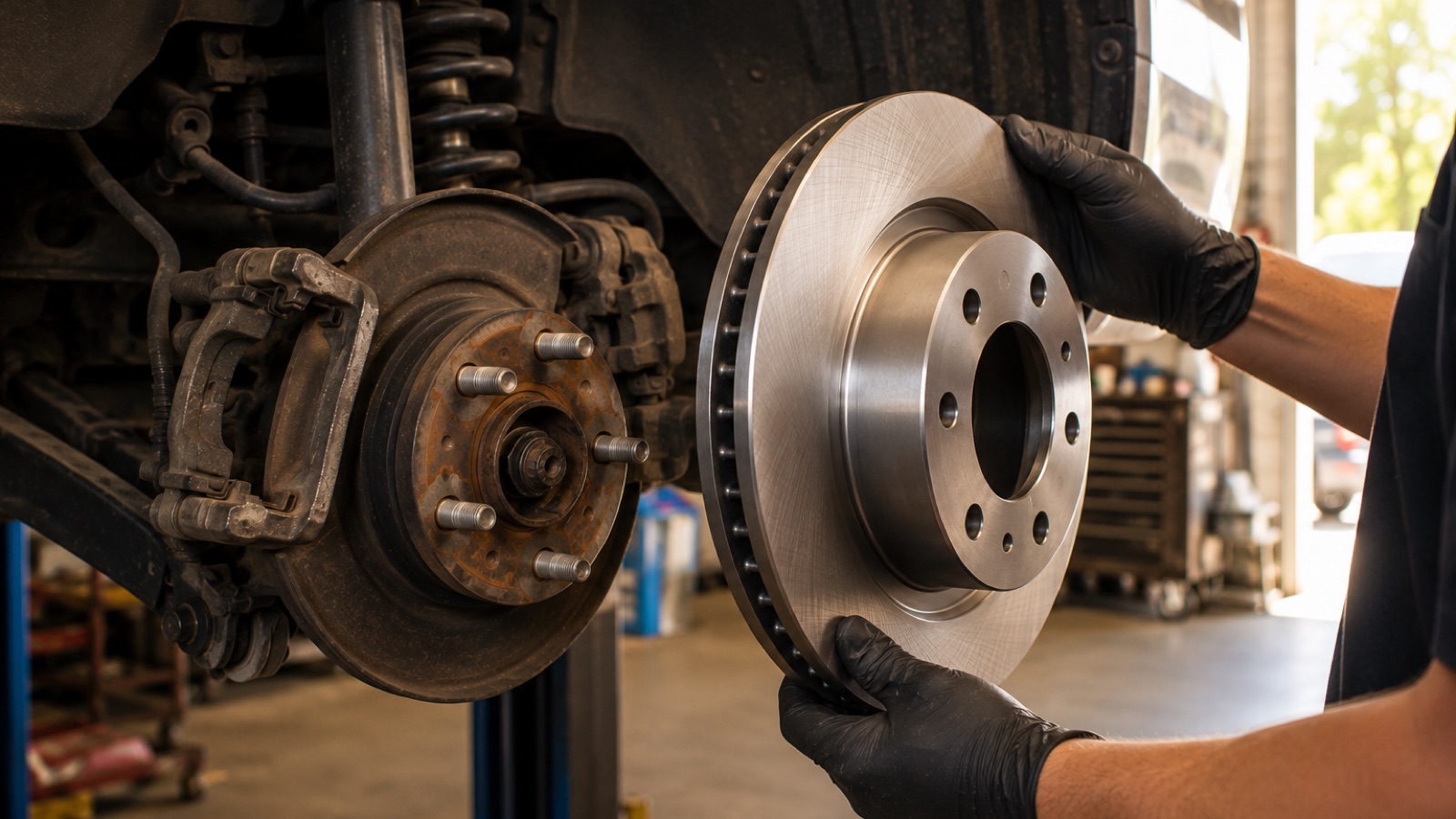
A brake rotor is the metal disc bolted behind each wheel — usually one at every wheel. When you press the pedal, the pads clamp down on that spinning disc, and the friction slows you down and stops the car. Think of grabbing a spinning bike wheel between two fingers — the rotor’s the wheel, the pads are your fingers. They wear out over time, and Atlanta heat and stop-and-go wear them faster. That’s normal — they’re supposed to.
Most folks only ever hear about brake pads. Nobody mentions the rotor — even though it’s doing half the work. So let’s fix that. This is a plain-English answer about what a brake rotor is, how it works, when it needs replacing, and what it costs here in Southwest Atlanta. No jargon, no upsell. Just the way I’d explain it standing in the bay next to your car.
What Is a Brake Rotor, Exactly?
A brake rotor is a flat metal disc, usually made of cast iron, bolted to the hub behind each wheel. When you press the brake pedal, the caliper squeezes the brake pads against both sides of that disc. The squeeze creates friction, and the friction slows the car down. The rotor spins with the wheel, so when the pads bite into it, the wheel slows with it. Simple physics, and it works every single time you stop.
How Many Rotors Does Your Car Have?
Most modern cars have four rotors — one per wheel. Some older cars have rotors up front and drum brakes in the rear instead. If your car was built in the last 15 to 20 years, odds are good you’ve got rotors on all four corners.
How a Rotor Works with the Pads and Caliper
The braking system is really just three parts working together:
- The rotor: The metal disc that spins with the wheel and takes the friction.
- The brake pad: The friction material that gets pressed against the rotor. It heats up and wears down over time. (More on that in what causes uneven brake pad wear. )
- The caliper: The clamp that holds the pads and squeezes them against the rotor when you hit the pedal.
When you press the pedal, hydraulic fluid pushes a piston inside the caliper. That piston presses the brake pad against the rotor on both sides. The rotor can’t go anywhere — it’s bolted to the hub. So it slows down, and your car slows down with it.
Here in Atlanta, you’re braking hard in traffic, coasting a bit, then braking again — over and over. Heat builds up. Material wears away. That’s normal wear. It’s also why staying on top of brake service matters more here than in cooler places. Want the full rundown of what we check? Here’s our brake repair service.
Types of Brake Rotors: Blank, Drilled, and Slotted
Rotors don’t all look the same. Here’s the difference, minus the marketing.
Blank (Smooth) Rotors
Plain metal discs with a smooth surface. They’re the standard, they’re reliable, and they’re what most cars come with from the factory. For most people, this is all you need.
Drilled Rotors
Rotors with holes drilled through them. The idea is the holes help heat escape. Does it matter? Maybe, for racing or heavy towing. On a daily driver in Atlanta, not much. They look aggressive, and some folks like that — but they don’t last longer, and they usually cost more.
Slotted Rotors
Rotors with grooves cut into the surface. Same idea as drilled — the slots are meant to vent heat and gases. They look cool. For most daily drivers, the real-world difference is small.
Drilled and Slotted Rotors
Both features at once. Performance enthusiasts like them. For everyday driving around Atlanta, they’re overkill.
Bottom line: For most people, blank rotors are the right call. They’re durable, affordable, and they do the job. We’re honest about what you actually need versus what just sounds cool.
Signs Your Brake Rotor Is Failing
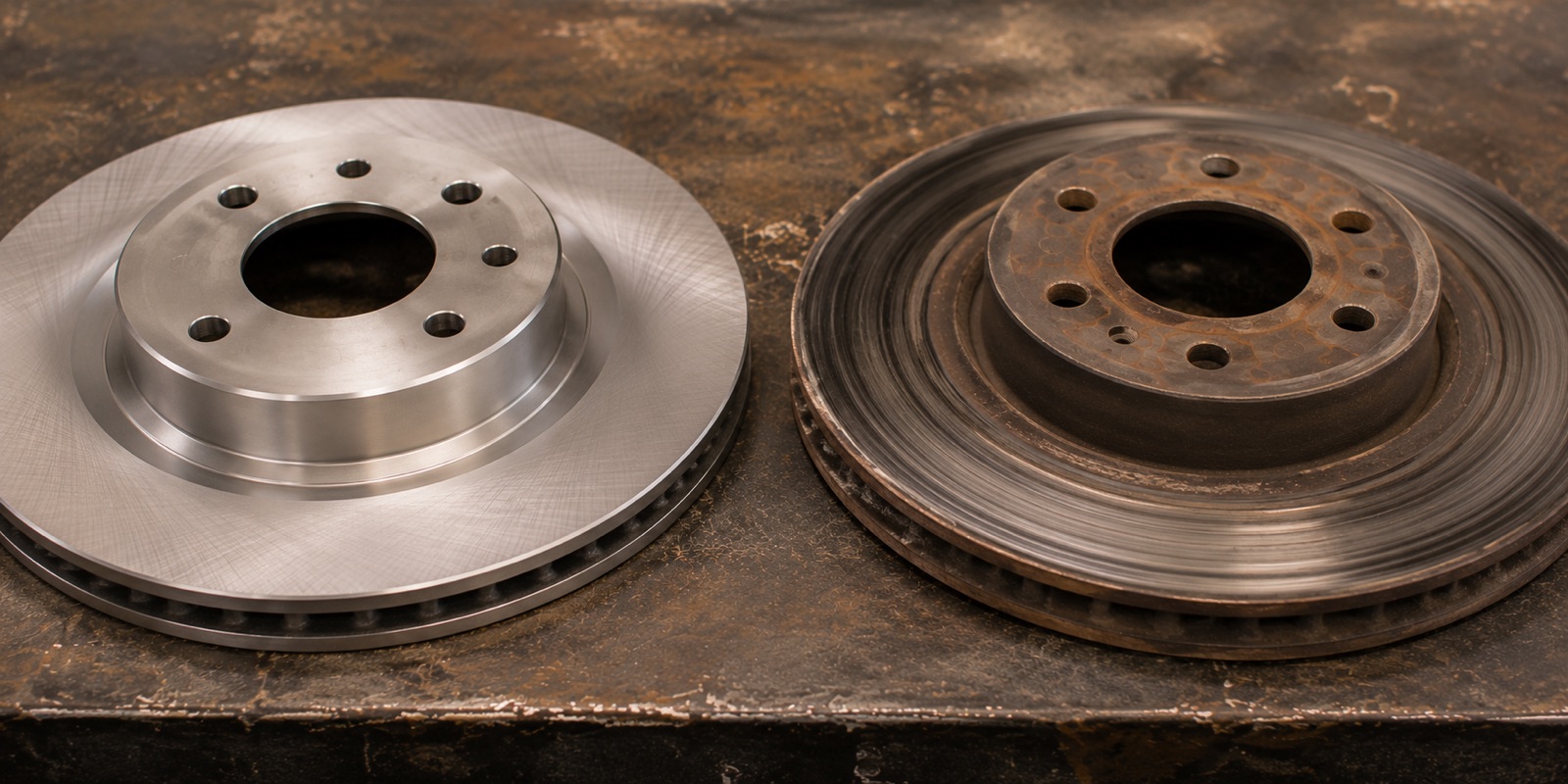
Rotors don’t fail out of nowhere. They warn you first. Watch for a pulsing brake pedal, grinding noises, or visible grooves on the rotor — those are the big ones. Here’s what each one means.
Vibration or Pulsing in the Brake Pedal
This is the most common sign. When the pedal pulses back at you in waves as you brake, you’ve likely got a warped rotor. The pad is hitting high and low spots as the disc spins. Atlanta heat is a frequent cause, and so is hard braking followed by driving through a puddle, which cools the rotor fast. This usually means replacement.
Squealing or Grinding Noise
Squealing is often just the pad wear indicators — little metal tabs that rub the rotor when pads get thin. Annoying, but it’s just a heads-up. Grinding is worse. That’s metal-on-metal, which means the pads are gone and the backing is scoring the rotor. If you hear grinding, come in right away. We can still fix it, but waiting spreads the damage.
Visible Grooves or Scoring on the Rotor
Pop the wheel off. Deep grooves carved into the surface mean the pads have been dragging — often from uneven wear. Either way, the rotor likely needs replacing.
Reduced Brake Power or Longer Stopping Distance
If the brakes feel soft or it’s taking longer to stop, the rotor may be too thin to make solid contact. Don’t ignore this one. Bring it in.
Rotor Thickness Below the Minimum Spec
Every rotor has a minimum safe thickness. Once it wears past that, it’s not safe. We measure thickness during every brake service and let you know before it becomes an emergency.
Rotor Replacement vs. Resurfacing
Years back, shops would resurface rotors — shave off a thin layer to smooth them out again. It saved a little money and stretched their life.
These days, most rotors come from the factory thin enough that resurfacing isn’t usually an option. It’s sometimes possible if there’s enough material left, but in most cases replacement is the call. A resurfaced rotor that’s already near minimum thickness will wear through again in a few thousand miles, and you’ll be right back here for another brake job.
We’re not saying this to upsell you. Resurfacing is cheaper up front. But on a worn-out rotor, it just doesn’t last. Replace it once, do it right, and you’re good for the next 25,000 to 50,000 miles, depending on how you drive. (Old rotors can rust onto the hub — here’s how a stuck rotor comes off if you’re curious what’s involved.)
Brake Rotor Replacement Cost in Southwest Atlanta
At Dad’s Auto Repair Shop, here’s what you’re looking at:
- Brake pads + rotors, front axle: $350+
- Brake pads + rotors, rear axle: $400+
If you just need pads, brakes start at $180 per axle. Our labor rate is $95/hr. Those rotor prices include new pads, new rotors, hardware, a full inspection of the caliper and slide pins, and a test drive. Everything’s backed by our 10-month / 10,000-mile warranty.
Got a BMW, Audi, Benz, or another European make? Give us a call first. Those often run a little more, and we’ll give you the exact number upfront. We don’t do hidden fees. You know the price before we touch your car. You can see more on our pricing page.
Why Atlanta Heat and Stop-and-Go Break Rotors Faster
Atlanta summers are hard on brakes. You sit in traffic, brake hard, creep forward, brake again. The rotor temperature can swing several hundred degrees in that cycle. Metal expands and contracts, and over time that stress causes warping.
Add the constant heat from sitting with your foot on the brake, and you’ve got faster wear. It’s just physics. That’s why we recommend brake inspections a bit more often here than you’d need in a cooler climate.
Frequently Asked Questions
How long do brake rotors last?
It depends on your driving. Stop-and-go city driving — like a Cascade Road commute — is harder on rotors than highway miles. Most last 25,000 to 70,000 miles. We check thickness during every brake service so you're never caught off guard.
Do I have to replace rotors when I replace brake pads?
Not always. It depends on rotor condition. During a brake job, we measure thickness and check the surface. If the rotors are still good, we keep them. If they're worn or damaged, we'll recommend replacing them — and we'll tell you which it is before we start.
Can you drive with a warped rotor?
You can, but don't go far. A warped rotor means uneven pad contact and weaker braking. Get it replaced before any long trip.
What causes a rotor to warp?
Heat stress and rapid cooling. Braking hard, then hitting a puddle, then braking again cycles the temperature fast. Atlanta's heat makes it more common. Towing warps them quickly too.
What's the difference between blank and drilled rotors?
Drilled rotors are a little lighter and look more aggressive. For most daily drivers here, blank rotors are fine — cheaper, last just as long, and do the job. If you love the look, drilled rotors work, but expect to pay more.
Why are rotors more expensive on my luxury car?
European and luxury vehicles often have larger rotors and pricier parts. Some have carbon ceramic rotors that cost far more than cast iron. Always ask — we'll quote you before we start.
Related reading
More honest brake reading:
- Brake pads and rotors together, or pads only?
- Ceramic vs OEM brake pads: which lasts longer?
- Top 5 brake problems and what they mean
- How long can you drive on low brake pads?
- Why brake fluid matters for safe stopping
- Why your car pulls to one side when braking
Come See Us
Rotors warn you before they fail — pulsing, grinding, squealing. If you’re feeling any of that, or the brakes just don’t feel right, get in touch or give us a call at (404) 758-4672. We serve Southwest Atlanta, around the Cascade Road area.
We’ll pull the wheels, measure the rotors, check for warping and scoring, and give you a straight answer about whether you need replacement or you’re good for a while. No charge for the inspection. No pressure. Just honest feedback from folks who do brake work every single day.