How Dad would explain it
The main brake problems to watch for are worn pads, warped or scored rotors, a stuck caliper, low or old brake fluid, and leaking brake lines. Most of them start small and give you a warning first, like a squeal or a soft pedal, before they turn into something bigger. Catching them early is almost always cheaper and safer than waiting. If something feels off, swing by the shop on Cascade Road for a free brake inspection and we’ll tell you straight what’s going on.
Most folks don’t think about their brakes until something feels off. A squeak at the stoplight. A shimmy in the wheel when you slow down. A pedal that sits a little lower than it did yesterday. That’s your car talking, and brakes usually start talking before they get serious.
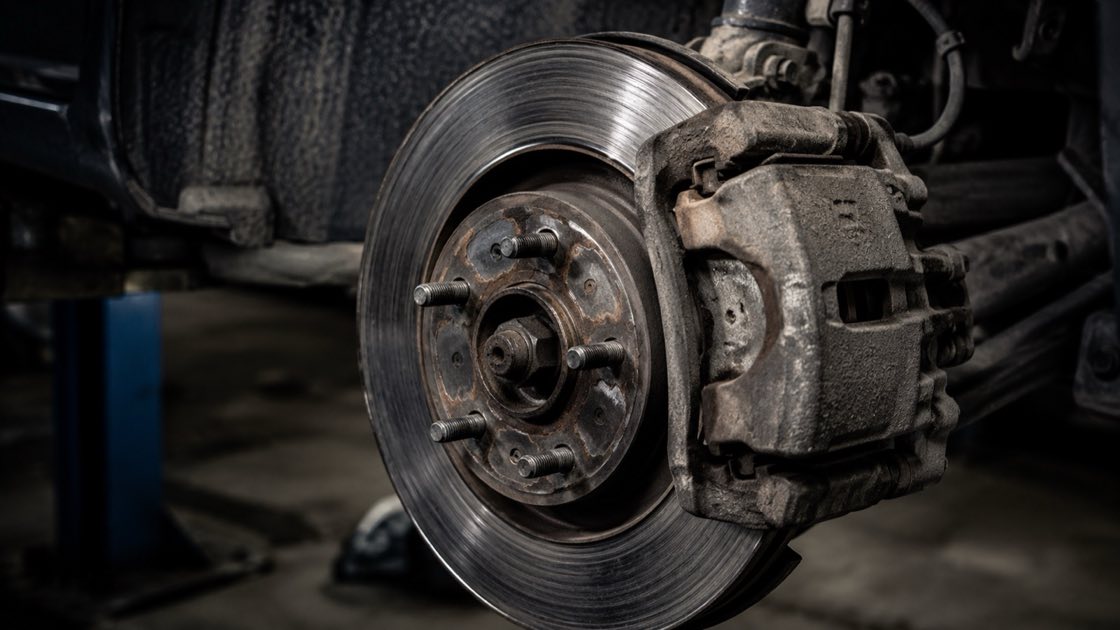
Your braking system is a team. The pads (the friction blocks that do the squeezing), the rotors (the metal discs your pads clamp onto), the calipers (the clamps that push the pads), the fluid (the hydraulic juice that carries your foot’s pressure to the wheels), and the lines (the hoses that fluid runs through) all have to work together. When one part starts to go, the whole system gets less reliable.
This post is the big-picture tour of the five most common brake problems and what each one means. If you just want the pad-specific warning signs, we cover those in detail over here:
7 signs you need new brake pads.
One local note. Down here in Southwest Atlanta, a lot of our customers do short stop-and-go trips. Errands around the West End, school runs near Adair Park, crawling up Cascade Road at 5 o’clock. That kind of driving works the brakes harder than steady highway miles, so brake parts wear a little quicker around here. If yours seem to need attention often, you’re not imagining it.
1. Worn brake pads
This is the most common one we see, by a mile. Pads wear down a little with every stop, like tread off a tire, until there’s not enough material left to grip safely.
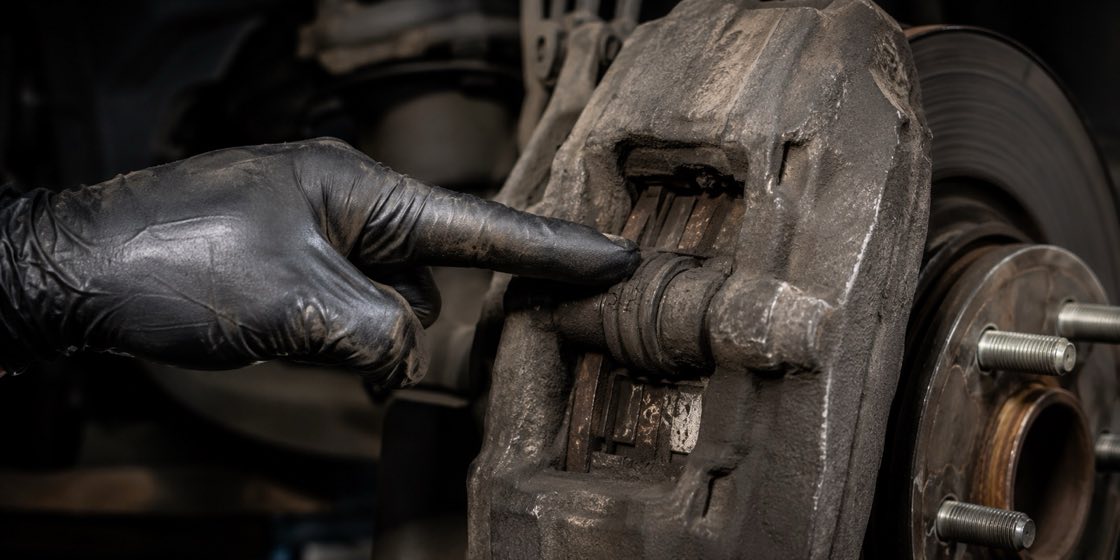
The first thing you’ll usually notice is a high squeal when you slow down. Most pads have a little metal tab built in that touches the rotor when the pad gets thin, on purpose, to make that noise. A squeal means time to plan a visit, not emergency. The pads still work.
A grind is the next stage and it’s a different story. Grinding means the pad material is gone and bare metal is dragging on the rotor. That chews up the rotor and turns a pad job into a pad-and-rotor job. If it were our car, we’d bring it in right away.
For the full rundown on pad wear, see 7 signs you need new brake pads.
2. Warped or scored rotors
The rotor is the metal disc your pads clamp onto. When it’s healthy it’s smooth and flat. Two things go wrong with rotors.
Warped rotors are usually what you feel as a pulse or shimmy through the brake pedal or steering wheel when you slow down, especially from highway speed. Heat is the culprit. All that stop-and-go braking heats the rotor up, and over time it can lose its flatness, so the pads grab unevenly. New to rotors? Here’s a plain explainer on what a brake rotor is.
Scored rotors are what happens when you let worn pads grind too long. The bare metal cuts grooves into the rotor face. Once a rotor is grooved or too thin, it needs to be replaced, not just the pads. That’s the cheaper-if-you-catch-it-early thing in action.
3. A stuck caliper
The caliper is the clamp that squeezes the pads against the rotor. It’s supposed to clamp when you brake and release when you let off. A stuck caliper doesn’t fully let go.
You might notice the car pulling to one side when you brake, a wheel that’s hot to the touch after a drive, worse gas mileage, or a faint burning smell. A caliper that stays clamped runs that one corner hot, which wears the pad and rotor on that side fast. It’s not the most common problem on this list, but it’s one people don’t think to check, and it’s worth catching early before it cooks the parts around it.
4. Low or old brake fluid
Brake fluid is the hydraulic juice that carries the pressure from your foot down to the wheels. No fluid pressure, no stopping. Two things happen to it.
Low fluid usually means it’s either leaking somewhere or your pads are worn (as pads wear, the fluid level naturally drops a bit). Either way it’s worth a look.
Old fluid is the sneaky one. Brake fluid soaks up moisture over the years, and once it does, it works less well, especially under hard braking when things get hot. A soft or spongy pedal is the usual tell. Most folks slowly get used to a softer pedal without noticing how much stopping feel they’ve lost, then they get the fluid serviced and can’t believe how firm it feels again. We check fluid condition on every brake inspection.
5. Leaking brake lines
The lines are the hoses and metal tubing that carry fluid from the master cylinder out to each wheel. They’re built to last, but they can corrode, crack, or get nicked over the years.
A leak is the one on this list we treat most seriously, because a line that’s losing fluid is losing the pressure that stops the car. Signs to watch for: a pedal that sinks slowly to the floor, the fluid level dropping again after a top-off, or a puddle of clear-to-brownish oily fluid near a wheel or under the engine. If you spot any of that, don’t wait it out, and go easy on the car until it’s looked at. This is a get-it-checked-soon one, not a next-month one.
Squeal vs. grind, the quick version
Two noises, two different messages, worth keeping straight:
- A squeal is the wear-indicator tab saying the pads are getting thin. It means plan a visit soon. The brakes still work.
- A grind is metal on metal, pad material gone, rotor getting damaged. It means come in now.
When in doubt, a free inspection settles it.
What brake work costs at Dad’s
We like to put real numbers up front so there are no surprises.
- Brakes start at $180 per axle (front or rear).
- Pads and rotors together run about $350+ for the front and $400+ for the rear, since rear setups often have a bit more going on.
- Every visit includes a free brake inspection, so even if you just want a measurement or a second opinion, that part doesn’t cost you anything.
- Every brake job is backed by our 10-month / 10,000-mile warranty, whichever comes first.
You can see the full breakdown on our pricing page, or read more about our brake repair service. We’re not here to scare anybody into work they don’t need. If your brakes still have life, we’ll tell you straight and send you on your way.
Frequently Asked Questions
What's the most common brake problem?
Worn pads, by far, especially with short stop-and-go driving around Southwest Atlanta. The good news is they almost always warn you with a squeal first.
Can I drive with grinding brakes?
We wouldn't. Grinding is metal on metal, and every mile risks damaging the rotor and turning a pad job into a pad-and-rotor job. Bring it in right away.
Why does my brake pedal feel soft or spongy?
Usually low or old brake fluid, or air or a leak in the lines. A soft pedal means the system is losing pressure somewhere, so it's worth getting checked sooner rather than later.
What makes the steering wheel or pedal shake when I brake?
Most often warped rotors that have lost their flatness from heat. It can also be a sticking caliper or uneven pad wear. A quick inspection tells us which.
How do I know if a brake line is leaking?
Watch for a pedal that slowly sinks to the floor, a fluid level that keeps dropping, or an oily clear-to-brownish puddle near a wheel. If you see any of that, get it checked soon and take it easy on the car until then.
How much does brake repair cost, and is the inspection free?
Brakes start at $180 per axle. Pads and rotors together run about $350+ front or $400+ rear. The inspection is always free, and our brake work is covered by a 10-month / 10,000-mile warranty.