How Dad would explain it
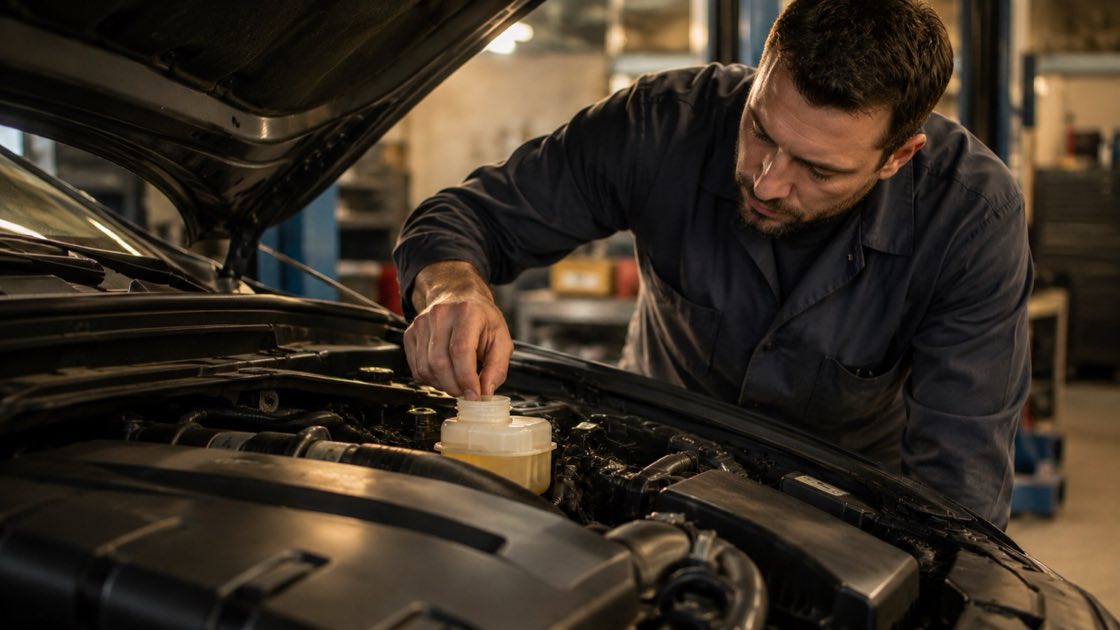
Brake fluid is the hydraulic juice that carries the push from your foot down to the brakes at each wheel, so when it goes bad your car stops slower. Trouble is, it quietly soaks up moisture from the air, and that water lowers its boiling point and makes the pedal feel soft. Most carmakers say to flush it every 2 to 3 years, and down here on Cascade Road the heat and humidity push it on the sooner side. We check yours free with every brake inspection.
Most folks know to change their oil, rotate their tires, and swap brake pads when they squeal. Brake fluid? Hardly anybody thinks about it. It does not squeak or leave a puddle, and the car keeps stopping, so it slides off the radar.
Here is the thing, though. That fluid is doing a real job every time you touch the pedal, and when it breaks down your brakes get lazy without you noticing. If your pedal has felt soft lately, come let us look before it turns into something bigger. You can schedule your appointment and we will check it out.
What Brake Fluid Actually Does
Brake fluid is hydraulic fluid, which is a fancy way of saying it pushes power through pipes. When you step on the pedal, the fluid carries that push through the brake lines to squeeze the brakes at all four wheels. No fluid pressure, no stopping.
Think of it like the messenger between your foot and your wheels. Clean fluid delivers the message fast and clear. Tired, watery fluid drags its feet, and you feel that as a softer pedal and a longer stop. That is why the fluid’s condition shows up directly in pedal feel, stopping distance, and how confident the car feels when you really lean on the brakes.
Why Brake Fluid Soaks Up Moisture
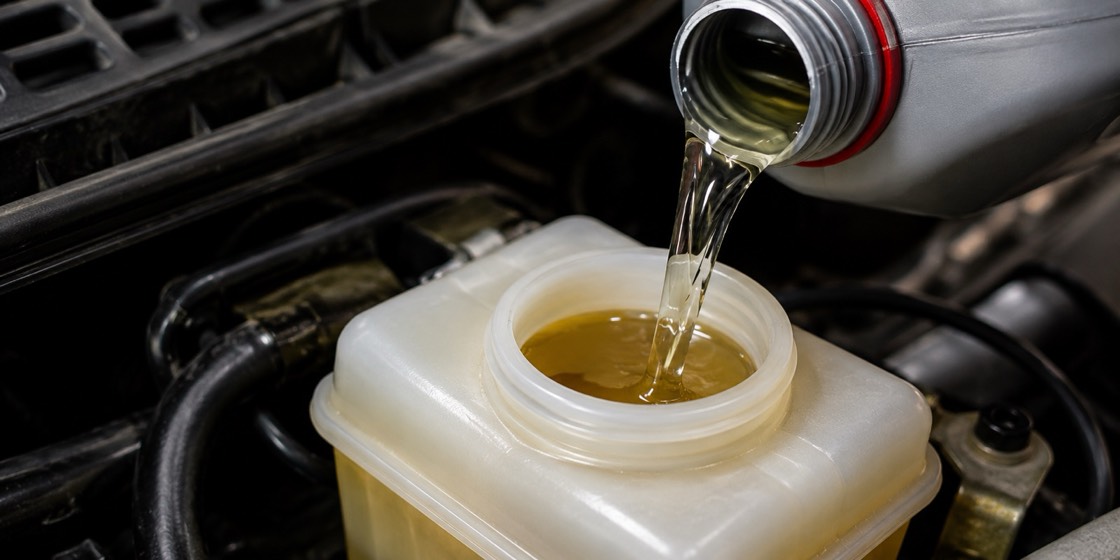
This is the part most people never hear. Brake fluid absorbs moisture right out of the air over time. The system is mostly sealed, but tiny amounts of water still work their way in, year after year. That matters because water has a much lower boiling point than brake fluid does.
When you brake hard, or brake over and over coming down a hill, the brakes get hot and that heat moves into the fluid. If there is water in there, it can boil into vapor. Vapor squishes. Fluid does not. So instead of a firm pedal you get a soft, spongy one, and your stopping power drops right when you need it most. Old fluid also lets corrosion start inside the lines and calipers, which gets expensive.
Here in Southwest Atlanta, the humidity speeds all that up. If you are running back and forth on Cascade Road, hauling around West End, Adair Park, Summerhill, or Greenbriar in the summer heat and stop-and-go traffic, your fluid is working harder and pulling in moisture faster than it would in a dry climate. That is why we keep a close eye on it for our neighbors over here.
Signs Your Brake Fluid Needs Attention
Brake fluid trouble usually creeps in slow, so drivers adapt without realizing it. Here is what we look for:
- Soft or spongy pedal: the most common sign the fluid is past its prime. If that is what you are feeling, our soft or spongy brake pedal post walks through it.
- Longer stops: the brakes still work, just not as sharp as they used to.
- Dark, dirty fluid: healthy fluid is fairly clear. Coffee-colored fluid is overdue.
- Brake warning light: some cars watch fluid level and pressure for you.
- Burning smell on heavy braking: worn-out fluid handles heat poorly.
Most of the time these show up gradually enough that you get used to them. That is exactly why we check the fluid on every free brake inspection, so you are not guessing.
How Often Should Brake Fluid Be Changed?
There is no single number for every car, because habits and manufacturers differ. But as a rule of thumb, most carmakers suggest a flush every 2 to 3 years. A few things shorten that window: lots of stop-and-go driving, heavy braking, humid weather, and long commutes. All of which describe a normal week around here.
When we do the work, we do not just top it off. We flush the old, moisture-heavy fluid out and put clean fluid in, then check the lines, calipers, and pedal feel while we are in there. Our labor runs $95/hr, you get a straight estimate before we touch anything, and the work is backed by our 10-month/10,000-mile warranty. You can see the rest of our numbers on the pricing page, and there is more detail on the full job over on our brake repair page.
We are not here to turn a fluid check into a giant repair bill. Most of the time, servicing the fluid early is what keeps the big repairs from ever showing up.
Why Folks Around Southwest Atlanta Trust Us
Brakes make people nervous, because most drivers are not sure what is normal and what is not. We keep it simple. If your fluid still looks healthy, we will tell you that and send you on your way. If it is overdue or dragging your braking down, we will show you why in plain English.
Whether your pedal feels soft, your stops have stretched out, or you just want peace of mind before a road trip, come see us. We will look it over, tell you straight what we see, and help you make the right call for your car. Easiest way to start is to book online, or just reach out if you have a question first.
Frequently Asked Questions
What does brake fluid actually do?
It is hydraulic fluid that carries the pressure from your foot, through the brake lines, to the brakes at each wheel so the car stops when you press the pedal.
Why does brake fluid go bad if the system is sealed?
It slowly absorbs moisture from the air over the years. That water lowers the fluid's boiling point, which can cause a soft pedal and weaker stopping when the brakes get hot.
How do I know if my brake fluid needs service?
Watch for a soft or spongy pedal, longer stops, dark or dirty fluid, or a brake warning light. We also check it free on every brake inspection.
How often should brake fluid be changed?
Most carmakers suggest every 2 to 3 years. Humid, stop-and-go Atlanta driving can push it toward the sooner end of that range.
Can old brake fluid actually damage my brakes?
Yes. Moisture in old fluid can start corrosion inside the lines, calipers, and master cylinder, which turns a cheap flush into a pricier repair down the road.
How much does it cost?
Our labor is $95/hr, you get an estimate up front, and the work carries a 10-month/10,000-mile warranty. See the pricing page for more.