How Dad would explain it
A soft or spongy brake pedal usually means there’s air in your brake lines or your brake fluid is old and full of moisture. It can also point to a leak or a worn master cylinder. Either way, it’s a safety thing worth checking soon, because your pedal should feel firm every single time. Bring it by and we’ll take a look for free.
You press the brake pedal and it just feels off. Maybe it sinks lower than it used to. Maybe you have to push it most of the way down before the car really starts to slow. The brakes still work, but they feel soft and mushy instead of firm.
That’s worth getting looked at. Your pedal should feel the same every time you press it. When it starts feeling spongy, your car is telling you something in the brake system isn’t holding pressure right. The good news: the cause is usually straightforward, and we check the whole system for free before we touch a thing.
If your pedal has been feeling soft lately, book online and let us find out what’s going on. We’re right here on Cascade Road in Southwest Atlanta.
Why a Soft Pedal Usually Means a Pressure Problem
Most of the time a soft pedal comes down to one of four things: air in the brake lines, old brake fluid that’s soaked up moisture, a leak somewhere, or a worn master cylinder (the part that pushes the fluid when you step on the pedal). All four affect the same thing, which is the pressure that actually stops your car.
Here’s the simple version. Your brakes work on hydraulic pressure. When you press the pedal, brake fluid pushes through the lines and squeezes the brakes at each wheel. Think of squeezing a water bottle full of liquid, firm and instant. Now picture that same bottle with a little air trapped inside. The air compresses first, so it feels soft and slow. That’s your spongy pedal. When we hear “the pedal feels soft,” we’re looking for wherever that pressure is getting lost.
Air in the Brake Lines
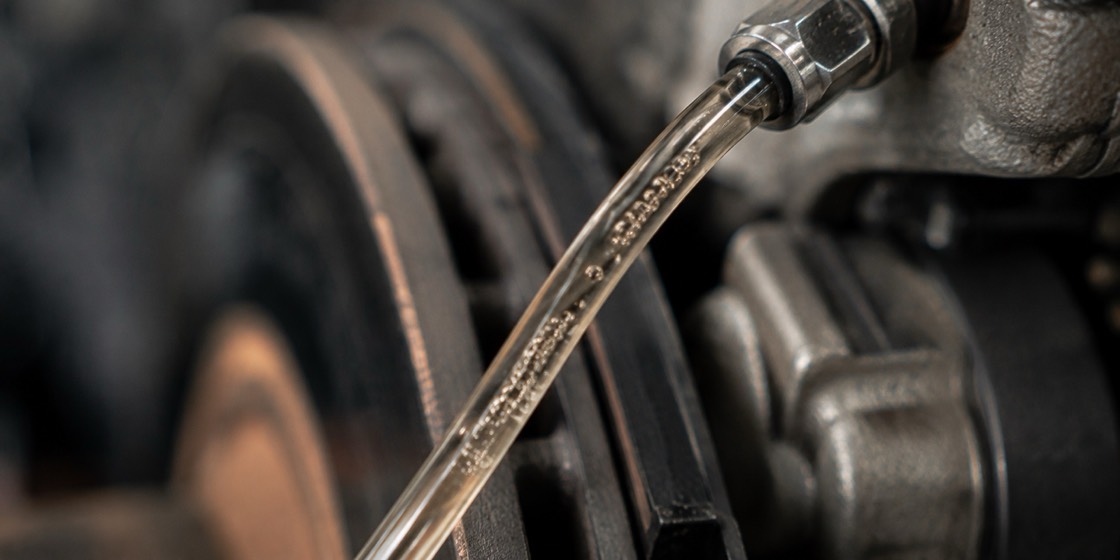
Brake fluid doesn’t compress, but air does. If air sneaks into the lines, the pedal feels soft, bouncy, or like it travels too far before the brakes grab. A lot of folks describe it as mushy.
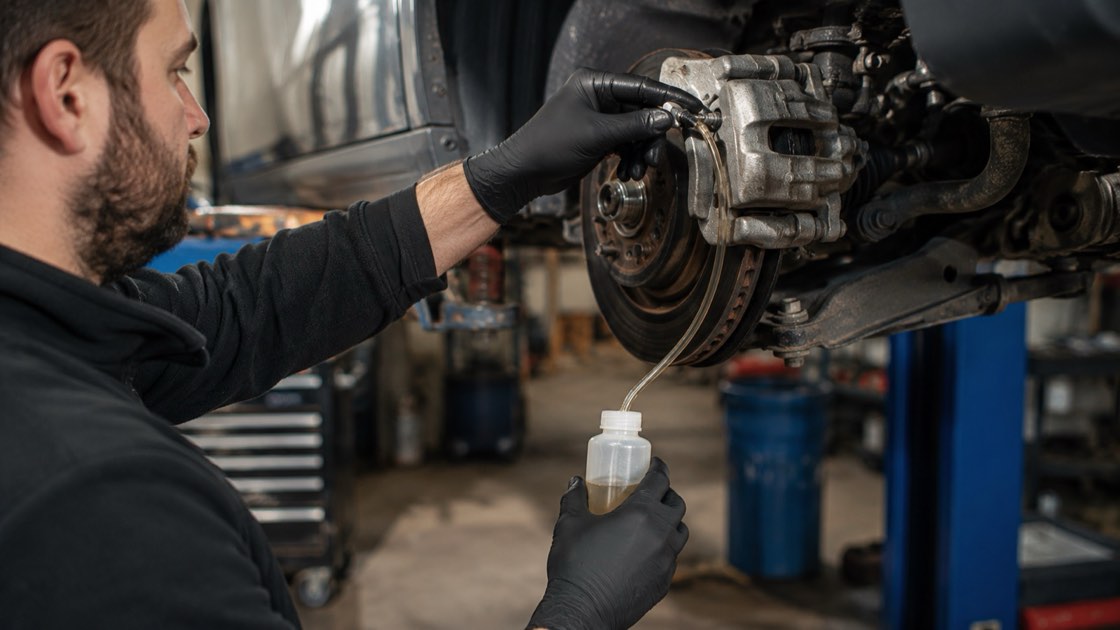
Air usually gets in after fluid runs low, after a leak, or after a brake job that wasn’t bled properly. Bleeding just means flushing the air back out of the system so it’s all fluid again. It’s a normal fix, and once the air’s gone the pedal firms right back up.
Old or Moisture-Laden Brake Fluid
Brake fluid quietly absorbs moisture over the years. Once there’s enough water in it, the fluid does a worse job of holding pressure, and the pedal starts to feel soft. The water can also cause rust inside your brake parts, which is the more expensive problem down the road.
This is the one most people never think about, because brake fluid isn’t something you see. Down here in Southwest Atlanta, all that stop-and-go on Cascade Road and the heat that comes with it is hard on fluid. If yours hasn’t been changed in a few years, it’s worth a look. We cover the why behind this in more detail in our post on why brake fluid matters.
A Leak in the System
If fluid is leaking out, pressure drops and the pedal goes soft. A leak can be at a brake line, a caliper, a wheel cylinder, or a fitting. Sometimes you’ll spot a few drops where you park around West End or Adair Park. Sometimes it’s slow enough that you won’t notice anything but the soft pedal.
A leak is the one we don’t want anyone driving on for long, because it only gets worse. If your fluid keeps running low, there’s almost always a leak behind it, and topping off the fluid without fixing the leak just kicks the can down the road.
A Worn Master Cylinder
The master cylinder is the part that turns your foot pressure into hydraulic pressure. When it wears out, it can let pressure slip past internally, and you’ll often feel the pedal slowly sink toward the floor while you’re holding it at a red light. It’s less common than air or old fluid, but it’s on our list, so we check it.
What We Check First
When someone tells us their pedal feels soft, we don’t guess. Several different things cause the same symptom, so we go through the system in order. Our inspection is free, and here’s what we look at:
- Brake fluid level and condition. Low or dirty fluid is one of the first tells.
- The brake lines, hoses, and fittings. We’re hunting for leaks or damage.
- The calipers and wheel cylinders. A sticking or leaking one changes how the pedal feels.
- Air in the system. Air pockets give you that spongy, delayed pedal.
- The master cylinder. We check whether it’s still holding pressure like it should.
- The pads and rotors. While we’re in there, we make sure nothing else needs attention.
A lot of the time the fix is smaller than people expect, often just a bleed or a fluid flush. If it’s bigger, we’ll show you what we found and explain it plain. Our labor runs $95/hour, we’ll give you the number before we start, and every repair is backed by our 10-month/10,000-mile warranty. You can see the rest of our brake repair services and our pricing anytime.
Should You Keep Driving on It?
Honestly, not for long. A soft pedal means your brakes aren’t responding the same way every time, and that matters most in the moments you can’t plan for: a quick stop in Summerhill traffic, a wet road, someone pulling out in front of you.
The tricky part is that it usually creeps up slowly, so drivers get used to it without realizing how much stopping power has slipped. We’d tell our own family the same thing we’ll tell you, which is to get it checked before it gets worse. It’s not us trying to scare you. It’s just brakes, and brakes are worth keeping right.
Frequently Asked Questions
Why does my brake pedal feel soft or spongy?
Usually it's air in the brake lines or old brake fluid that's absorbed moisture. It can also be a leak in the system or a worn master cylinder. All of them cause the brakes to lose pressure, which is what makes the pedal feel soft.
Is it safe to keep driving with a spongy brake pedal?
It's not something to drive on for long. A spongy pedal means the system isn't holding pressure consistently, and that gets worse over time. Get it inspected soon. Our inspection is free.
How do you fix air in the brake lines?
We bleed the brakes, which flushes the trapped air back out and refills the system with clean fluid. Once the air's gone, the pedal firms back up to normal.
How often should brake fluid be replaced?
It depends on the car and how you drive, but many vehicles do well with a fluid flush every couple of years. With all the stop-and-go around Greenbriar and Cascade Road, it's worth checking sooner rather than later.
What will it cost to find out what's wrong?
The inspection is free. If a repair is needed, our labor is $95/hour and we'll give you the price before we start. Every repair comes with a 10-month/10,000-mile warranty.
Where are you located?
We're on Cascade Road in Southwest Atlanta, easy to reach from West End, Adair Park, Summerhill, and Greenbriar. Come on by.
Come See Us
If your brake pedal feels soft, spongy, or just not like itself, don’t wait it out. Bring it to Dad’s Auto Repair Shop on Cascade Road and we’ll check the whole system for free, tell you straight what’s going on, and get your pedal feeling firm again.
Book your appointment today or give us a shout. We’re glad to help.