How Dad would explain it
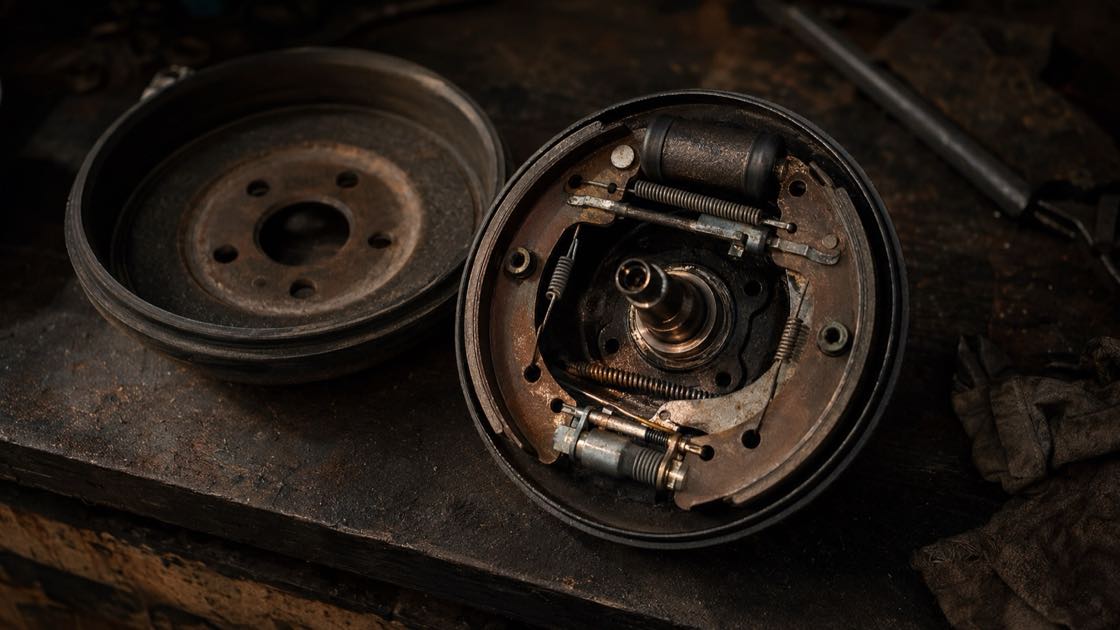
A brake shoe is basically a brake pad’s cousin that works on the inside of the wheel instead of the outside. On a lot of cars — usually older ones or the rear of economy models — the back brakes are “drum brakes”: a metal drum spins with the wheel, and two curved shoes sit inside it. When you brake, those shoes push outward against the drum, and that friction slows you down. Same job as your front brake pads, just working the opposite direction — and they usually last a good while longer.
What Is a Brake Shoe, Really?
A brake shoe is the friction piece inside a drum brake. Picture your front brake pads — flat blocks that squeeze in on a spinning disc. A brake shoe does the same job from the other direction. Instead of squeezing in, two curved shoes push outward against the inside of a metal drum that spins with the wheel. That rubbing is the friction that slows you down.
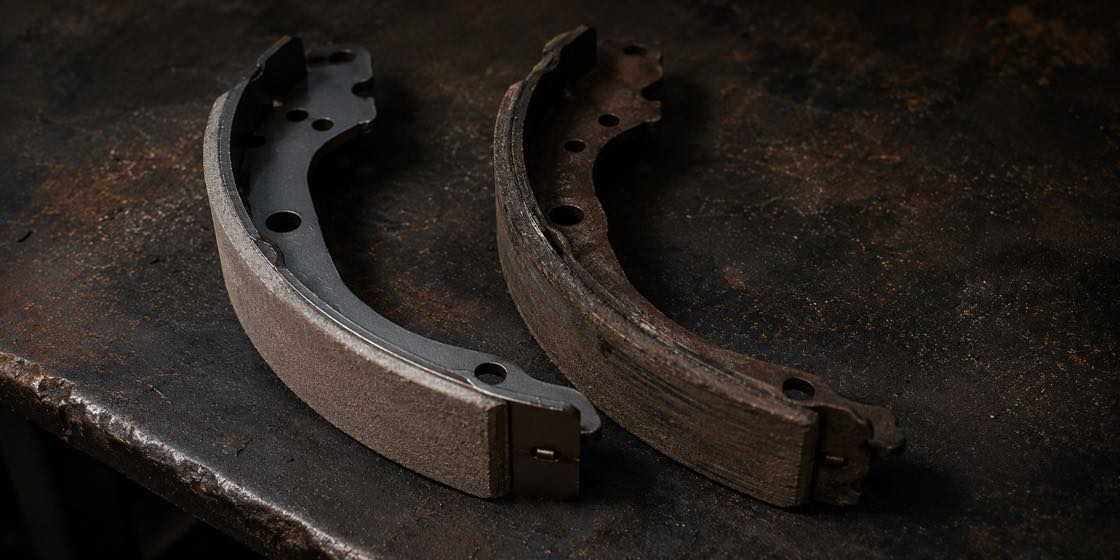
The shoe itself is a curved metal plate with friction material on the outer face. They’re shaped like a smile, and they live inside the drum where you can’t see them. You’ll mostly find them on the rear wheels of older cars and economy models. Same job as a pad, just hidden away and built a little tougher.
If the bike-brake picture helps: a pad is like the brake on your bicycle clamping the rim from outside. A shoe is like that same brake flipped around, pressing out from the inside instead.
Drum Brakes vs. Disc Brakes: Where Brake Shoes Live
Most cars run disc brakes up front. A disc brake uses pads that pinch a flat metal disc — they cool off fast and they’re easy to get at. The rear is where it gets mixed. Plenty of cars, especially older ones and budget models, run drum brakes in the back, and that’s where your brake shoes live.
Why drums in the back? Two reasons. They’re cheaper to build, and the curved shoe gives you good leverage — a little pressure makes a lot of stopping force. That leverage is handy because your rear brakes do less of the heavy lifting than the front ones anyway.
Here’s the short version:
- Disc brakes (front, and the rear on many newer cars): flat pads squeeze a disc. Cool off well, quick to service, pads wear a bit faster.
- Drum brakes (rear on a lot of older and economy cars): curved shoes push out inside a drum. Long-lasting, but they hold heat and take more work to get into.
One more thing worth knowing: even on cars with disc brakes at all four corners, the parking brake often uses a little set of shoes tucked inside the rear discs. Small ones, but they’re in there.
How Long Do Brake Shoes Last?
Brake shoes usually outlast brake pads. We generally see them good for somewhere in the 30,000–70,000 mile range, depending on how and where you drive. If you spend your days in stop-and-go traffic on I-285 or the Connector here in Southwest Atlanta, figure the lower end. If you’re mostly highway, you’ll likely stretch it.
The reason they last is that curved shape spreads the wear out, so less friction material disappears with each stop. The trade-off is they’re doing harder, hotter work when they finally do wear down. The good news: shoes tend to wear slow and steady and give you fair warning before they quit. Pads can go quiet for a while and then surprise you — shoes usually speak up first.
Signs Your Brake Shoes Need Replacing
Here’s what to listen and feel for:
- Squealing from the rear wheels — usually high-pitched. That’s the wear indicator letting you know the friction material is getting thin.
- Grinding, especially in reverse — metal on metal means the friction material is gone. Don’t sit on this one.
- A soft or spongy brake pedal — it sinks farther than it used to.
- The parking brake won’t hold — the car creeps even when it’s set. On a lot of vehicles the rear drums handle the parking brake.
- Pulling to one side when you brake — often one shoe is more worn than the other.
- Fade after a lot of braking — drums trap heat, so braking can go soft on long downhill runs.
Any of these — especially squealing or grinding — means it’s time to get the rear brakes looked at. Worn shoes left alone will eventually score and damage the drum itself, and then you’re buying both. Catching it early keeps it cheaper.
Brake Shoe vs. Brake Pad: Head-to-Head
Here’s how the two stack up:
| Feature | Brake Shoe | Brake Pad |
|---|---|---|
| Location | Inside the drum (usually rear) | On a disc (front, sometimes rear) |
| Shape | Curved, arc-shaped | Flat |
| Lifespan | 30,000–70,000 miles | 25,000–70,000 miles |
| Wear pattern | Slow and gradual | Can be fast or slow |
| Cooling | Holds heat, slower to cool | Cools well, less fade |
| Service | More teardown to get into | Quicker to replace |
| Cost | Varies by vehicle | Pads start at $180/axle |
Neither one is “better.” They’re built for different jobs. Discs are great for stopping power and shedding heat up front. Drums are reliable and cheap for the lighter work the rear wheels do. Most cars use a mix of both, and that’s by design.
If your front brake pads need attention, that’s everyday work for us — pads start at $180 per axle, and every brake job is backed by our 10-month / 10,000-mile warranty, whichever comes first. (We say warranty, not “insured” — it’s our promise to stand behind the work.)
Do You Replace Brake Shoes in Southwest Atlanta?
Straight answer: heavy drum-and-shoe work isn’t a standard service we take on at Dad’s. It needs specific tooling and setup, and it’s just not work we set up to do.
That doesn’t mean we’ll leave you hanging. If you come by or give us a call, we’ll take an honest, free look at what’s going on. Depending on your vehicle and what we find, we may be able to handle the lighter stuff — but if it’s a real drum job, we’ll point you to somebody we trust who’s set up for it. Our labor rate is $95/hr, so if we do take something on, you’ll know exactly what you’re paying before we start.
Give us a call at (404) 758-4672 or book a free look → and tell us your year, make, and model. We’ll be straight with you about whether it’s something we can do or whether you’ll be better off down the road.
Frequently Asked Questions
What is a brake shoe?
A brake shoe is a curved friction piece that works inside a drum brake. Instead of squeezing in like a brake pad, the shoes press outward against the inside of a spinning drum. You'll mostly find them on the rear wheels of older or economy cars.
How do brake shoes work?
When you press the pedal, hydraulic pressure pushes the shoes outward against the inside of the drum. That curved shape gives you good leverage — a little pressure makes a lot of stopping force — and the friction slows the wheel down.
What's the difference between brake shoes and brake pads?
Shoes are curved and push outward inside a drum, usually on the rear. Pads are flat and squeeze in on a disc, usually up front. Shoes generally last longer; pads are simpler to service and cool better.
How long do brake shoes last?
Usually 30,000–70,000 miles. Stop-and-go Atlanta traffic wears them faster; steady highway miles stretch them out.
Can I drive with worn brake shoes?
For a short while, maybe — but not long. Worn shoes will eventually damage the drum itself, and that turns a small repair into a big one. If you hear squealing or grinding from the rear, get it checked within a week.
How do I know if my shoes are worn down?
The honest way is to pull the wheel and measure the friction material. Here's how to measure brake shoe thickness if you want to check it yourself.
Get Your Rear Brakes Checked
Whether you’re in an older sedan with drums in the back or a newer car with a drum-based parking brake, those brake shoes matter for stopping safely. If you’ve heard squealing from the rear, felt a soft pedal, or it’s just been a while, come see us here in Southwest Atlanta.
We’ll take an honest, free look and tell you straight what you’re working with. If it’s something we can handle, great — and if a real drum job is better handled elsewhere, we’ll send you to someone we trust. No charge either way.
Call (404) 758-4672 or book a free look →. We’re here to keep your brakes working right.