How Dad would explain it
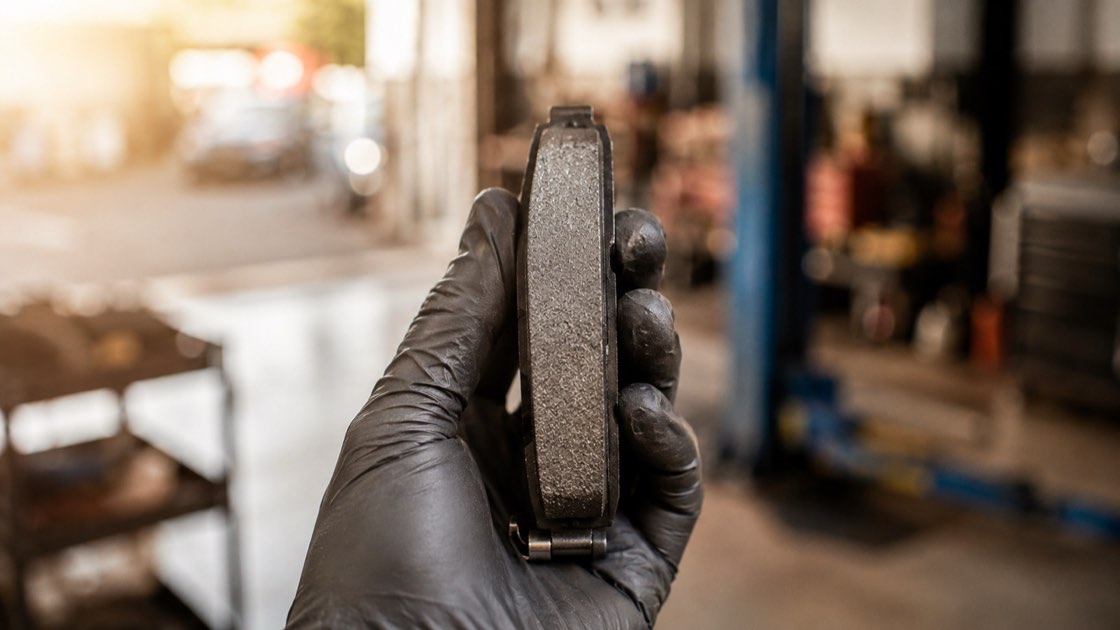
A new brake pad has about 10 to 12 millimeters of friction material on it — call it a couple of stacked nickels. That’s the part that does the squeezing to stop your car, and every time you brake you shave off a tiny bit. Once it’s down to around 3 or 4mm, it’s worn out and time for a new set — and below 2mm you’re risking your rotors, which costs a lot more to fix. Not sure where yours stand? Swing by and we’ll pull a wheel and measure them while you wait.
So how thick is a new brake pad?
Most new brake pads have about 10 to 12 millimeters of friction material when they go on. That friction material is the soft stuff bonded to a metal backing plate — it’s what grabs the rotor and slows you down. So when folks ask how thick a new brake pad is, that 10 to 12mm number is the part that matters. Everything else is just metal holding it in place.
That number only goes one direction. Down. Every stop wears off a hair of material. You won’t feel it. But after enough stops, that thick pad is a thin pad, and a thin pad is one you need to think about.
New pads are thick. Worn pads are thin. That’s the whole story.
Why thickness is the thing that matters
The friction material is the whole job. More of it means more stops left before you’re back in my bay. Less means you’re getting close.
There’s a heat side too. When you brake, all that motion turns into heat. A thick pad has plenty of material to soak up that heat and shrug it off. A worn-down pad has less material to soak up heat, so it runs hotter — and a hot brake doesn’t grab as well as a cool one. Load the car up, ride the brakes down a long hill, and a tired thin pad feels softer than you’d like. A healthy thick one keeps right on working.
So thickness isn’t some spec sheet number. It’s how much brake you’ve got left.
OEM, aftermarket, and the performance stuff
Not every new pad starts at the same thickness. Here’s the lay of the land:
- Factory (OEM) pads — about 8 to 10mm. What your car rolled off the line with. OEM just means original equipment manufacturer — the pad made to fit your exact car. Fine pads. Sometimes run a touch thinner to save weight.
- Quality aftermarket pads — about 10 to 12mm. What I put on most cars here. Good name-brand friction material, made to fit your exact car, plenty of thickness for a long life. This is the sweet spot.
- High-performance pads — about 12 to 15mm. Built for heavy trucks, towing, or folks who really lean on their brakes. More material, handles hard use better, costs a bit more.
- Budget pads — about 8 to 10mm. The cheap stuff. We don’t recommend them. Thinner material, lower-grade friction, and they wear down fast. You’ll be back sooner than you should be.
You don’t need to memorize any of this. Just know that when I hand you a fresh set, you’re getting good 10 to 12mm pads made to fit your exact car. Want the longer version on what counts as healthy? Here’s what good brake pad thickness looks like , and here’s how I handle brake jobs.
When it’s time to replace them
Plan on new pads when the friction material gets down to about 3 to 4mm. That’s worn out — still stopping you, but running low, and it’s the smart time to come in. A lot of cars have a little metal tab built into the pad that starts squealing right around there. That squeal isn’t your car falling apart. It’s a doorbell — the pad telling you to make an appointment.
What you don’t want to do is ride them below 2mm. That’s the danger zone. Once the friction material’s that thin, the metal backing starts chewing into your rotor, and now instead of a brake job you’re buying rotors too. That’s the expensive mistake I’d love to help you avoid.
Here in southwest Atlanta, off Cascade Road, most folks do plenty of stop-and-go, and that wears pads a little quicker than easy highway miles. So if it’s been a while, just have somebody peek at them once a year.
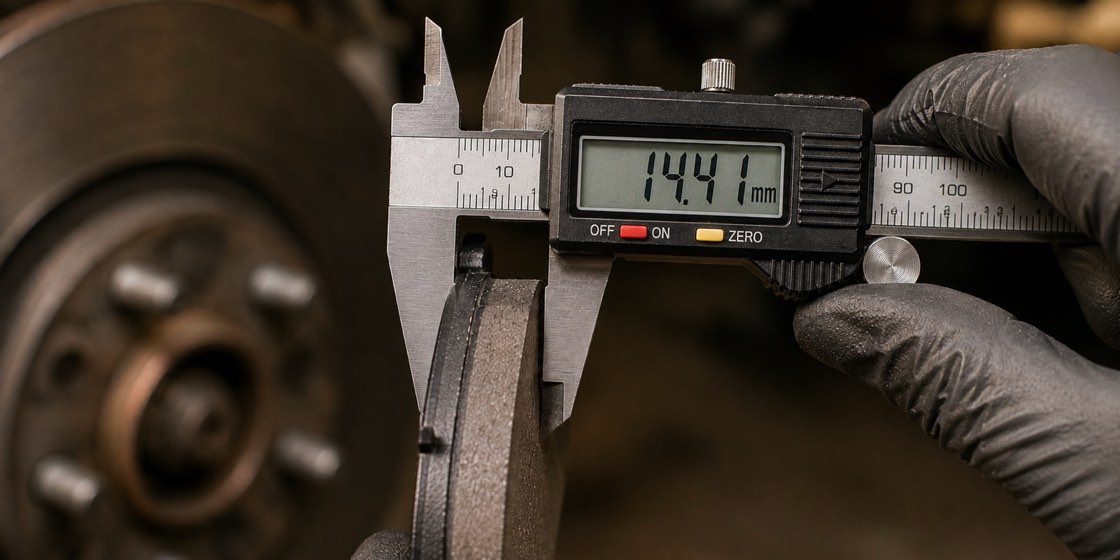
You don’t have to guess at any of this yourself, either. Swing by and we’ll pull a wheel, measure the pads with a caliper, and tell you exactly where you stand while you wait. Why guess when you can know? Come see us or call (404) 758-4672.
Frequently Asked Questions
Is a thicker pad always a better pad?
Not always. A good quality 10 to 12mm pad made for your car beats a thicker budget pad every time. The friction material and the fit matter more than chasing the biggest number. Thicker is nice, but quality is what keeps you safe.
My brakes squeak when I back out in the morning — are my pads shot?
Probably not. A little light squeak first thing, especially after rain or heavy dew, is usually just surface rust burning off the rotors. It clears up after a few stops. The squeal to worry about is the steady, ringing one that shows up while you're driving — that's the wear tab doing its job. If you're hearing that, bring it in.
Can I just eyeball the pads through my wheel?
Sort of. Peek through the spokes — a fresh pad shows a good chunk of dark material, a worn one is a thin sliver against the shiny backing plate. That'll tell you "fine" or "uh-oh," but not a real number. For that you've got to pull the wheel and measure, which we do for free.
How much is a brake job at Dad's?
Brakes start at $180 per axle, installed, and they're backed by our 10-month / 10,000-mile brake warranty — so if something's not right with the brake work in that window, you bring it back and we take care of it. You can see the rest of my pricing here.
Come get them measured
Brake pad thickness isn’t complicated. A new pad’s got about 10 to 12mm of friction material, you wear it down a little with every stop, and around 3 to 4mm it’s time for a fresh set. Below 2mm you’re playing with your rotors — the part I’d rather save you from.
If you’re not sure where yours are, don’t lose sleep over it — just roll by. We’ll pull a wheel, measure them while you wait, and tell you straight whether you’ve got plenty of road left or it’s time for new ones. No appointment, no pressure. Stop in or reach out, or ring us at (404) 758-4672. We’re right here in southwest Atlanta and happy to take a look.