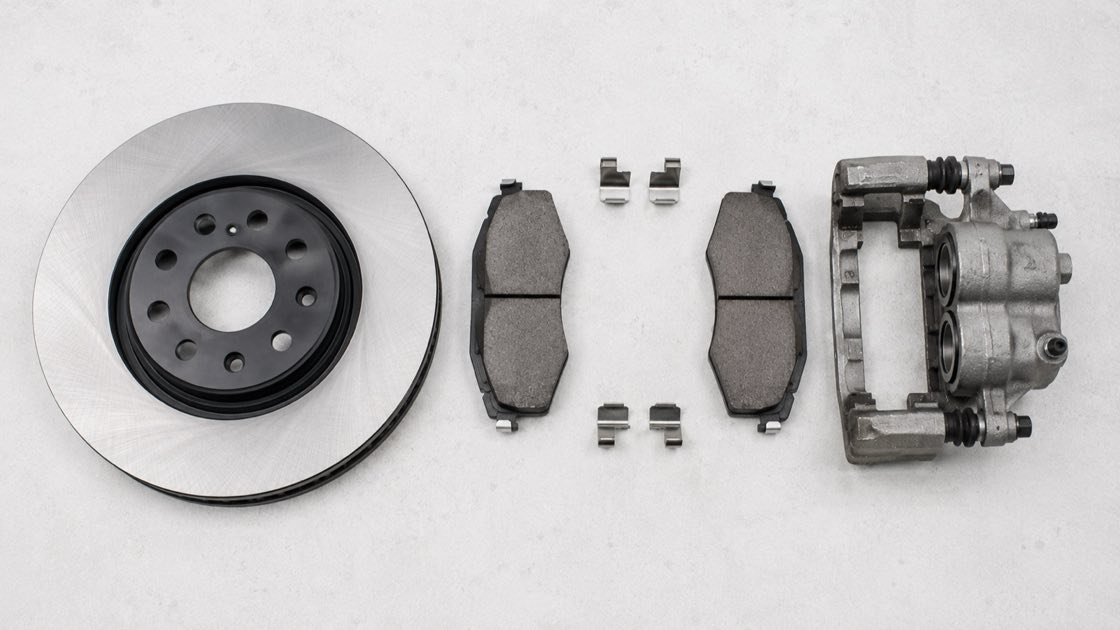
How Dad would explain it
Short answer: two. Almost every car has two brake pads per rotor — one on each side, squeezing it like your two hands clamping a sheet of paper. So a normal car with disc brakes on all four wheels has eight pads total. If your car has older drum brakes in the back, it’s four pads up front and four shoes in the rear instead. Not sure which you’ve got? Bring it by and we’ll take a look for free.
So How Many Brake Pads Per Rotor?
Most folks hear “brake pads” and figure it’s one simple number. Fair guess, but the real answer is trickier than it sounds. Pads come in pairs — two brake pads per rotor, one on each side. A typical four-wheel car with disc brakes on all four corners has eight pads total. If your car has drum brakes in the rear instead, you’ve got four disc pads up front and four brake shoes in the back.
That’s the whole thing in a nutshell. Let me walk you through it so it sticks.
The paper-between-two-hands trick
Imagine you’re holding a piece of paper between your two hands and squeezing to slow it down. One hand on each side. That’s your brake system — two pads clamping down on each rotor from opposite sides.
So for each wheel with disc brakes, you’ve got one rotor (the paper) and two pads (your two hands). Your whole car is just that setup repeated four times, once per wheel.
Two pads times four wheels gets you eight. Simple math.
How Many Brake Pads Does a Car Have Total?
It depends on how your car is built. Here are the three setups we see.
Disc Brakes on All Four Wheels (Most Modern Cars)
- 2 pads per rotor
- 1 rotor per wheel
- 4 wheels
- Total: 8 brake pads
This is the most common setup on cars built in the last 15–20 years. If you’re driving a recent sedan, SUV, or truck, this is probably you.
Disc in Front, Drum in the Rear (Older or Budget Vehicles)
- Front: 2 pads per rotor × 2 rotors = 4 disc brake pads
- Rear: 2 shoes per drum × 2 drums = 4 brake shoes (not “pads”)
- Total: 4 brake pads + 4 brake shoes
Drum brake shoes aren’t the same as disc brake pads. They’re curved, and they press outward against the inside of a drum instead of clamping a flat rotor. Different part, different job.
Performance Vehicles with Multi-Piston Calipers
Some performance setups use more than 2 pads per rotor — those big calipers with extra pistons can hold more than two. You won’t see this on a normal commuter car, so don’t lose sleep over it.
Inner vs. Outer Brake Pads: What’s the Difference?
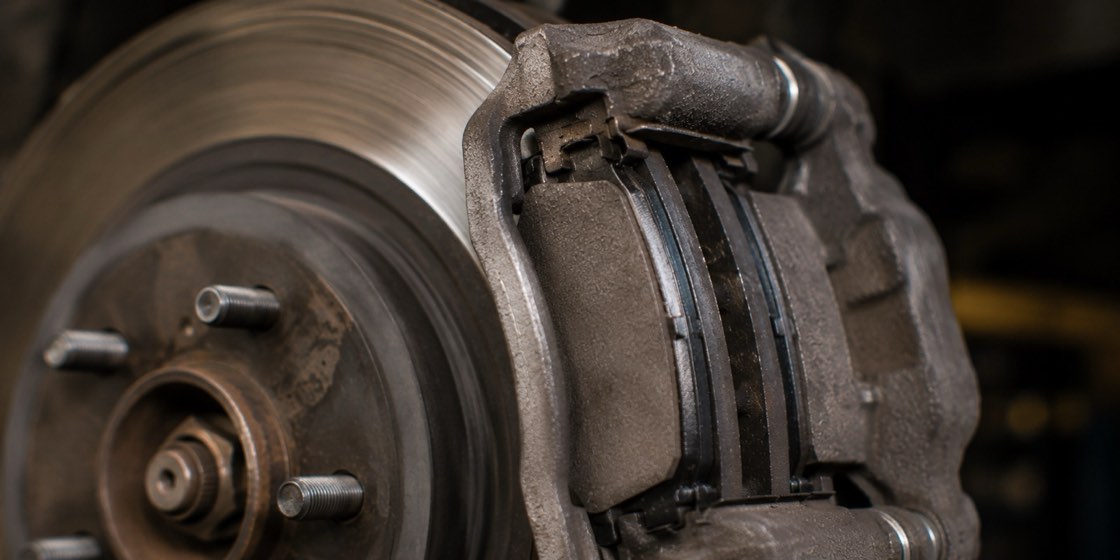
Each rotor has an inner pad and an outer pad.
- Inner pad: Sits on the wheel side of the rotor. Pushed directly by the caliper piston(s).
- Outer pad: Sits on the outside of the rotor. Pushed by the caliper body as it reacts against the inner pressure.
When you press the pedal, both pads clamp the rotor at the same time, one from each side. That two-sided squeeze is what slows you down.
In practice, the inner pad often wears a little faster. That’s normal — it’s closer to the piston and sees more direct pressure. When we inspect brakes here, we check both pads on every rotor, every time.
Are All Four Brake Pads Replaced at Once?
Generally yes — but by axle, not one at a time. We do both front pads together or both rear pads together. Never just one side. Here’s why.
If you replace only one side, you get uneven braking. One wheel grabs harder than the other and pulls your car to that side when you stop. That’s both dangerous and annoying.
The pads on an axle wear at about the same rate. So if one side needs replacing, the other side is right behind it. Doing both at once is just the right call.
At Dad’s, brake pad replacement is priced per axle:
- Front or rear pads only: starting at $180/axle
- Pads + rotors, front: ~$350+
- Pads + rotors, rear: ~$400+
You can see the full breakdown on our pricing page.
Do Front and Rear Brake Pads Wear at the Same Rate?
No. Front pads wear much faster — usually 2 to 3 times faster than the rears.
When you brake, your car’s weight shifts forward. That puts more of the stopping load on the front wheels. So the front pads do more work, run hotter, and wear out sooner.
In our Southwest Atlanta stop-and-go around Cascade Road, those front pads get a real workout. If your rears still have plenty of life when the fronts are done, that’s normal — and it’s why a front brake job tends to come up more often than a rear one. We’ll tell you exactly where everything stands before we touch a thing.
How Many Brake Pads Come in a Package?
When you buy pads, they usually come in a set for one axle — two pairs, so four pads. A “front set” covers both front wheels.
At Dad’s, we supply the parts ourselves. We source quality pads that fit your specific vehicle, so you don’t have to chase down your own or worry about getting the wrong box.
How Thick Are Brake Pads, and When Do They Need Replacing?
A new brake pad is roughly 10–12 mm thick. Down to 3–4 mm, you’re in the “replace soon” zone. At 2 mm or less, you’re out of time.
Most pads have a little metal wear indicator tab. When the pad wears down far enough, that tab rubs the rotor and makes a squeal. That’s your warning.
If you hear grinding instead of squealing, you’ve gone past the warning — metal is now scoring the rotor. Come in immediately.
Brake Pad Replacement at Dad’s Auto Repair Shop
Here’s what you get with a brake job:
- Brake pad replacement starting at $180/axle
- Both pads on that axle replaced together
- Hardware included (clips, shims)
- Caliper slide pins inspected and lubricated
- Rotor thickness checked
- Test drive included
- Covered by our 10-month / 10,000-mile warranty
Driving a luxury vehicle? Give us a call before you come in. Pricing varies on those, and we’d rather tell you upfront.
Frequently Asked Questions
How many brake pads per rotor?
Two. One on each side of the rotor. They clamp down from both sides at the same time when you press the pedal.
How many brake pads does a car have total?
Most cars with disc brakes on all four wheels have eight pads total. Cars with drum brakes in the rear have four pads and four shoes.
Should I replace all four brake pads at once?
Replace by axle — both fronts together or both rears together. Mixing an old pad and a new pad on the same axle causes uneven braking.
How long do brake pads last?
It depends on how you drive. Stop-and-go around Southwest Atlanta wears pads faster than highway miles. Front pads typically last 25,000–50,000 miles in mixed driving. Rears often last longer.
Can I replace just one brake pad?
No. Pads are replaced by axle pair. One new pad would create uneven friction and hurt your safety. Always do both pads on the same axle together.
Why do front pads wear faster than rear pads?
When you brake, the car's weight shifts forward. That puts more stopping force on the front wheels, which means more friction and faster wear up front. It's normal on every car.
Ready to Get Your Brakes Checked?
We check brake pad thickness on all four corners as part of every brake service. If you’re hearing a squeal, feeling a pulse in the pedal, or just want to know where you stand, bring it by. We’ll tell you exactly how many pads you’ve got left and whether you need service now or down the road. No charge for the look.
We serve Southwest Atlanta only (Cascade Road area). Call us at (404) 758-4672 or book online and we’ll get you taken care of.
Want to understand the part itself? Read what is a brake pad.