How Dad would explain it
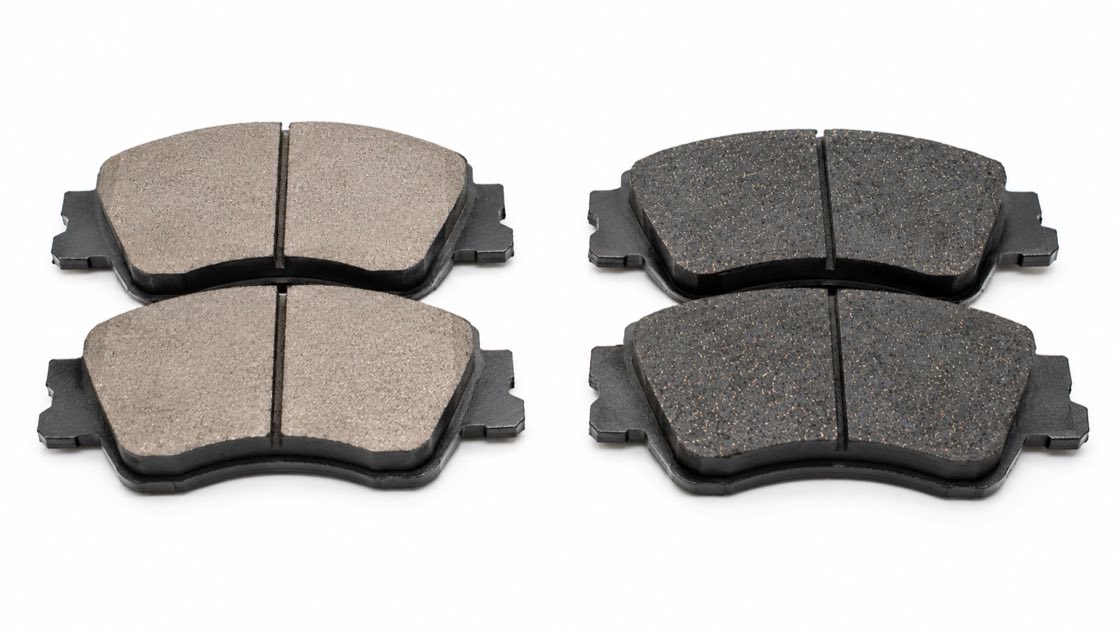
For most folks driving daily around Southwest Atlanta, ceramic pads are the easy pick — they run quieter, throw off less dust on your wheels, and hold up well in stop-and-go traffic. “OEM-equivalent” just means a pad built to the same quality the carmaker uses, which is what we install here. The honest truth is the “best” pad depends on your car and how you drive it, so the real answer is fewer slammed stops, not a fancier pad.
Most people don’t think about brake pads until something starts squealing. Then all of a sudden you’re hearing words like ceramic, semi-metallic, OEM, premium, and economy, and it feels like more of a decision than it needs to be.
Here’s the short version: ceramic and OEM-equivalent pads can both be a good call, depending on your car and how you drive. The mistake folks make is thinking there’s one “best” pad for everybody. And if you drive around here — Cascade Road, West End, Adair Park, Greenbriar — your brakes already work harder than most. If yours have been squeaking or shaking, it’s a good time to reserve your appointment today and let us take a look.
Why Southwest Atlanta Traffic Wears Pads Faster
Stop-and-go driving is the hard part. Every time you stop, your pads wear a little — that’s normal. But crawling down Cascade Road at rush hour, hitting every light through the West End, sitting in summer heat near Summerhill and Greenbriar — that’s a lot of stops packed into a short drive, and every one adds heat and friction.
Think of pads like the soles of your shoes. Walking across the house wears them slow. Running concrete stairs all day wears them fast. Southwest Atlanta traffic is the stairs.
We see it all the time. Somebody switches from mostly highway miles to a daily commute through town, and their pads wear out way quicker than they expected. Same car, same driver — just harder stops, more often.
What “OEM-Equivalent” Actually Means
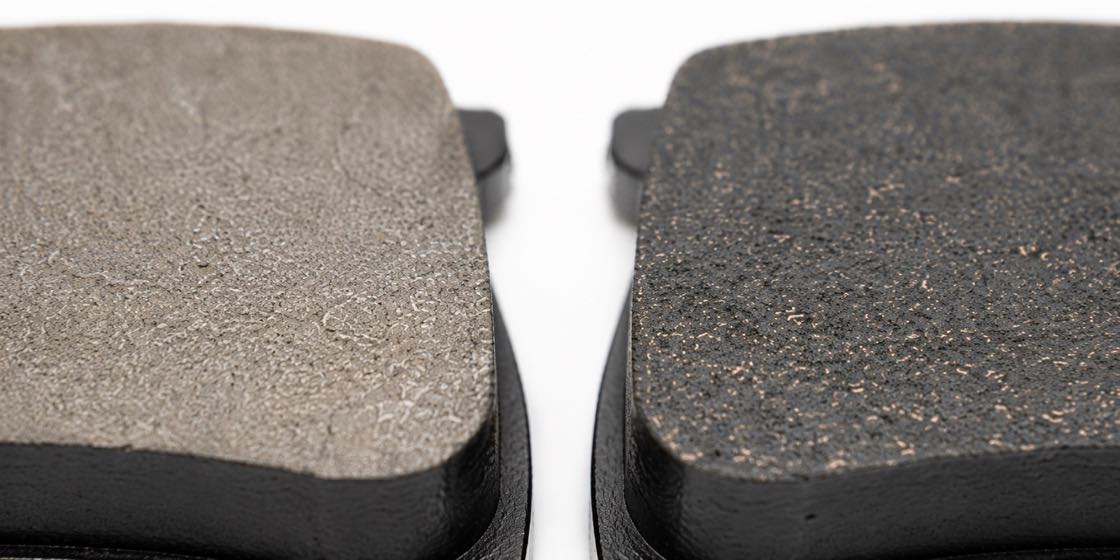
OEM stands for Original Equipment Manufacturer — the part your car came with from the factory. A true OEM pad is the one with the carmaker’s name on the box, usually at a dealer price.
Here at Dad’s, we install OEF3 brake solutions pads, which are OEM-equivalent. That just means they’re built to the same quality standard the carmaker uses — the right material, the right fit for your vehicle — without the dealer markup. You get factory-grade braking feel and lifespan, and you don’t pay extra for a logo. For daily driving and predictable, comfortable braking, that’s a solid setup for most cars.
What Ceramic Pads Are Designed For
Ceramic pads use a different material blend than older semi-metallic pads. Semi-metallic pads have metal fibers in them — they bite hard and handle heat, but they’re noisier and dustier. Ceramic trades a little of that aggressive bite for some real everyday perks.
Folks pick ceramic because they usually:
- Last a long time under daily driving
- Throw off less brake dust (cleaner wheels)
- Run quieter
- Handle repeated stop-and-go heat well
- Wear evenly
That heat handling matters around here, since your brakes barely get a chance to cool between lights. The cleaner wheels are a nice bonus too. Not sure what’s right for your car? Book your service and we’ll walk through it with you.
So Which One Lasts Longer?
Usually the first thing people ask. For most daily drivers in heavy traffic, ceramic pads tend to last as long or longer, mostly because they shrug off heat well over time. If you want a deeper look at how a pad actually works, we broke it down here: what is a brake pad.
That said, lifespan still comes down to:
- How you drive
- Vehicle weight
- How much traffic you sit in
- The shape of your rotors and brake system
- Pad quality
Somebody who slams the brakes every block can wear through ceramic pads quick too. The pad helps. Your right foot helps more.
When OEM-Equivalent Still Makes Sense
Ceramic isn’t automatically “better” for every car. OEM-equivalent pads are often the right call for:
- Drivers who want that exact factory braking feel
- Cars engineered tightly around their original brake setup
- Lighter daily driving
- Some luxury models that prefer a specific pad
If it were our own car, we’d look at how it’s actually driven before picking. That’s the whole point — match the pad to the driver, not the other way around.
Signs Your Pads Need a Look
Most folks wait until the brakes sound awful. Your car usually warns you sooner. Here’s what we check:
- Pad thickness — thin pads are the clearest sign.
- Squealing — a lot of pads chirp when they get low.
- Grinding — that usually means the pad’s worn past its limit.
- Shaking when you brake — can point to a warped rotor or uneven wear.
- Heavy dust — sometimes a sign of fast wear or cheaper pads.
We’re not here to turn every brake check into a big bill. Plenty of times the pads have life left, and we’ll tell you so. But if something’s worn or unsafe, you’ll hear it straight.
Does Pad Quality Matter?
It does. Cheap pads wear faster, dust more, and get noisy under hard traffic — and our roads already put plenty of stress on brakes without bargain-bin parts. That doesn’t mean you need the priciest pad on the shelf either. The goal is the right balance of lifespan, comfort, quiet, and cost. We’d rather get you the right pad for how you drive than upsell you on the most expensive box.
What It Costs and What’s Covered
We keep brake pricing straightforward. Brake service starts at $180 per axle, and every brake job comes with a 10-month / 10,000-mile warranty — whichever comes first. You can see more on our pricing page, and if you want a full rundown of front brake costs, we covered that here: front brake pad replacement cost. Want the whole picture on what we do? Take a look at our brake repair service.
Frequently Asked Questions
Do ceramic brake pads really last longer?
Often, yes — especially in heavy stop-and-go traffic, since they handle repeated heat well. But how you drive still matters most.
What does "OEM-equivalent" mean?
It's a pad built to the same quality standard the carmaker uses, without the dealer price tag. The OEF3 pads we install are OEM-equivalent.
Do ceramic pads make less brake dust?
Usually, yes. Most ceramic pads leave noticeably less dust on your wheels than older semi-metallic ones.
Which is better for Southwest Atlanta traffic?
For most daily drivers crawling through town, ceramic tends to handle the heat and wear a little better. But the right answer depends on your car — we're happy to help you decide.
How much does a brake job cost here?
Brakes start at $180 per axle, and every job is backed by our 10-month / 10,000-mile warranty.
How often should I get my brakes checked?
At your regular service visits, or anytime you hear noise, feel shaking, or notice your braking feeling different.
Come See Us
If your brakes have been squeaking, shaking, or wearing down faster than they used to, don’t wait on it. Bring it by Dad’s Auto Repair Shop off Cascade Road and we’ll figure out whether ceramic or OEM-equivalent pads make the most sense for your car — no pressure, just a straight answer. Book your spot or reach out anytime.