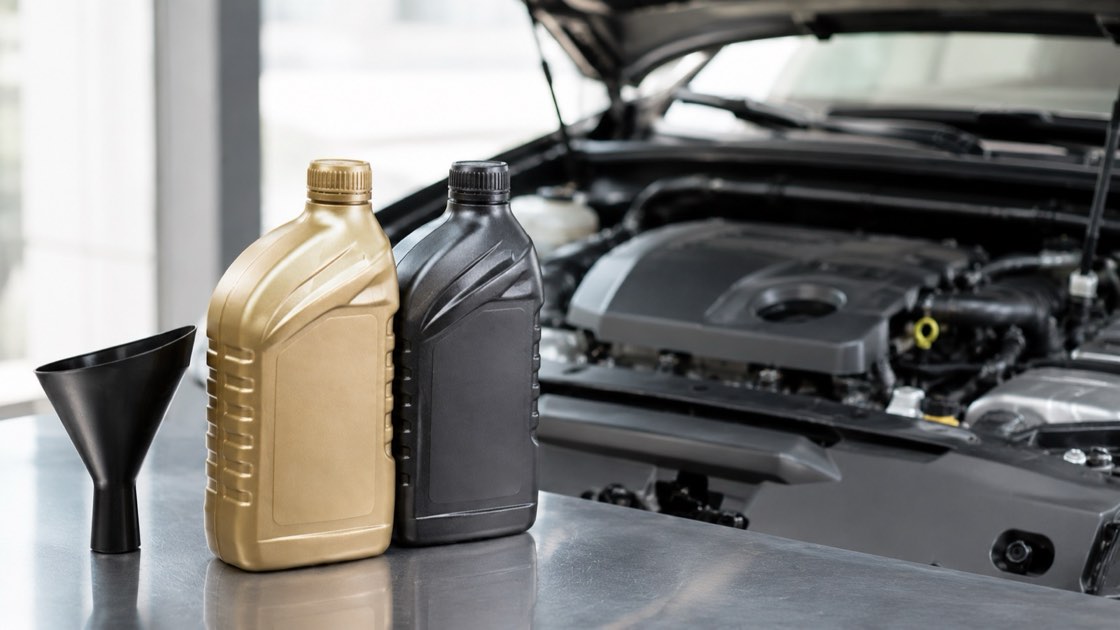
How Dad would explain it
Use the grade your manufacturer specs, printed in your owner’s manual or right on the oil cap. Yes, the grade matters, but the answer’s already been picked for you. Thinner oil (like 0W-20) flows easier on cold mornings and helps gas mileage; thicker oil (like 5W-30) holds up under more heat and load. Put in what your car calls for and you’re done.
You hear “0W-20” or “5W-30” during an oil change and your eyes glaze over. We get it. Most folks just want the right oil in the engine without a chemistry lesson.
So here’s the honest answer up front: the grade does matter, but you don’t have to guess. The right one for your car is already printed in your owner’s manual and usually stamped right on the oil cap under the hood. Use that. We stock the common grades and put in what your car calls for, not whatever’s closest on the shelf.
If you’re not sure what your engine takes, set up your visit today and we’ll check it for you.
What Those Oil Numbers Actually Mean
The numbers aren’t random. The first number with the “W” is the Winter rating. It tells you how easily the oil flows when the engine is cold. The lower that number, the better it flows on a cold start. So 0W-20 pours easier first thing in the morning than 5W-30.
The second number is how thick the oil stays once the engine is hot and running. A “20” stays a touch thinner when hot; a “30” stays a touch thicker. Think syrup: cold syrup is sluggish, warm syrup runs. Engine oil works the opposite way on purpose, staying flowable cold and holding its body when hot.
Modern engines are built around very specific oil flow. That’s why your manufacturer picks a grade instead of saying “use whatever.”
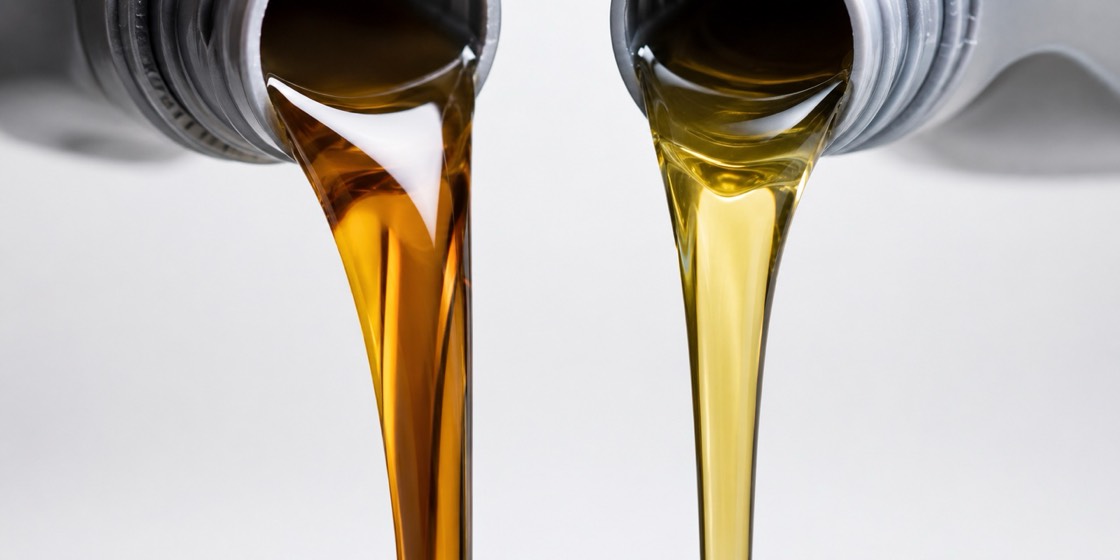
Why Newer Engines Often Call for 0W-20
A lot of newer cars are designed around thinner oil like 0W-20, mostly for fuel economy. Thinner oil creates less drag inside the engine, so it works a little less hard and you get slightly better mileage. You also get faster oil flow on cold starts.
Newer engines are built with tighter internal clearances, designed around that thinner oil from day one. That’s why dumping in thicker oil “for extra protection” can actually work against you. Thicker isn’t automatically better. It’s only better if your engine was built for it.
Why Some Vehicles Still Use 5W-30
5W-30 is still everywhere, especially on older cars, trucks, SUVs, and engines that work harder. It stays a little thicker when hot than 0W-20, and that extra body can hold up better under high heat and heavy loads.
Vehicles that often call for 5W-30:
- Older engines
- Higher-mileage vehicles
- Plenty of trucks and SUVs
- Performance engines
- Cars that run in serious heat
We’ve seen this one plenty: somebody assumes thinner is always better, switches their truck over, and it starts running rougher because the grade no longer matches what the engine was built for. Match the engine, not the trend.
What Atlanta Heat Has To Do With It
Out here on Cascade Road and around Southwest Atlanta, our cars earn their keep in the heat. West End, Adair Park, Summerhill, Greenbriar, summers run hot and the traffic runs slow. Stop-and-go driving in July means more engine heat, more idling, and oil that breaks down a little faster.
None of that changes which grade your car calls for. It’s still whatever’s in the manual. What it does change is how much regular oil service matters. A car baking in Cascade Road traffic every day works its oil harder than one cruising open road in cooler weather, so staying on top of your changes is worth it.
Can You Switch Between 0W-20 and 5W-30?
Sometimes it’s fine, sometimes it isn’t. The thing that decides it is what your manufacturer built the engine around. Engine age, mileage, how much oil it burns, and our heavy heat and traffic all play in, but the manual is always the best starting point. We’re not big on experimenting with grades off internet advice. Sticking close to what the manufacturer specs is almost always the right call. If it were our car, we’d use what the engine was designed for instead of guessing.
What Happens If You Use the Wrong Grade?
Using the wrong grade now and then on one fill-up usually won’t wreck an engine overnight. But running the wrong viscosity over and over can add up to worse fuel economy, more engine wear, rough cold starts, burning oil faster, and engine noise. That’s the honest picture. Not a scare, just a reason to use the right stuff. If you’re not sure which grade your car needs, book your next oil service today and we’ll sort it out with you.
What We Actually Do During an Oil Change
An oil change is more than draining and refilling. We check the oil’s condition, confirm the engine’s getting the grade it calls for, top off the level, look for leaks or seepage, and swap in a clean filter. A lot of the time, folks just need to hear they’re already using the right oil. We’re not here to upsell you on things you don’t need.
A full synthetic oil change with us is $88 out the door. No surprise add-ons at the counter. You can see the rest on our pricing page, and here’s how our oil change service works.
Why Folks Around Southwest Atlanta Trust Us
A lot of people walk into a shop expecting confusing talk or pressure to approve work they don’t understand. That’s not how we run things on Cascade Road.
If your engine’s built for 0W-20, we’ll tell you why. If 5W-30 makes more sense for your truck, we’ll tell you that too. We’ll check it over, explain what we see in plain English, and let you make the call. Want a closer look at the numbers first? Read how much a full synthetic oil change costs and how often to change synthetic oil on a low-mileage car.
Frequently Asked Questions
Is 0W-20 thinner than 5W-30?
Yes. 0W-20 flows thinner on cold starts and stays a little thinner when hot compared to 5W-30.
Can I use 5W-30 instead of 0W-20?
Sometimes, but it depends on what your manufacturer specs. Check your owner's manual or the oil cap, or let us confirm what your engine was built to use.
Does oil grade affect gas mileage?
A little. Thinner oils like 0W-20 create less drag inside the engine, which can help fuel economy slightly.
Is thicker oil better for high-mileage engines?
Not always. Some high-mileage engines do better on thicker oil, but oil that's too thick can cause problems in an engine designed for thinner oil. Go by the manual.
How do I know which grade my car needs?
Your owner's manual is the best place to start, and the grade is usually printed right on the oil cap. Or bring it by and we'll point it out for you.
Come See Us
Not sure whether your car takes 0W-20, 5W-30, or something else? Bring it by the shop on Cascade Road and we’ll check the manual, the cap, and how you drive, then put in exactly what your engine calls for. Book an appointment or reach out with a question anytime. We’re glad to help.